Edgen AI operates independently of, and is not controlled by Aspen Digital Financial Limited.
Bear steepener threatens stocks as 10-year yields hit 19-year high
 Edgen Stock·Jul 31 2026, 10:48
Share to
Share to
Copy link



[1] Kevin Warsh's 'Bear Steepener' Is No Goldilocks Moment for Stocks - WSJ (https://www.wsj.com/finance/stocks/kevin-wars ...)[2] Analysis: Fed Chairman Warsh's credibility in question after leaving interest rates unchanged (https://www.msn.com/en-us/money/markets/analy ...)[3] Bond rout warns Warsh that tough talk is not enough (https://www.usatoday.com/story/business/perso ...)[4] Fed Holds Interest Rates Steady as Kevin Warsh Says Rising Treasury Yields Tighten Financial Conditions (https://www.econotimes.com/Fed-Holds-Interest ...)[5] Don't freak out about Kevin Warsh's 'credibility' (https://www.msn.com/en-us/money/savingandinve ...)
Related News
Jul 31 2026, 11:18
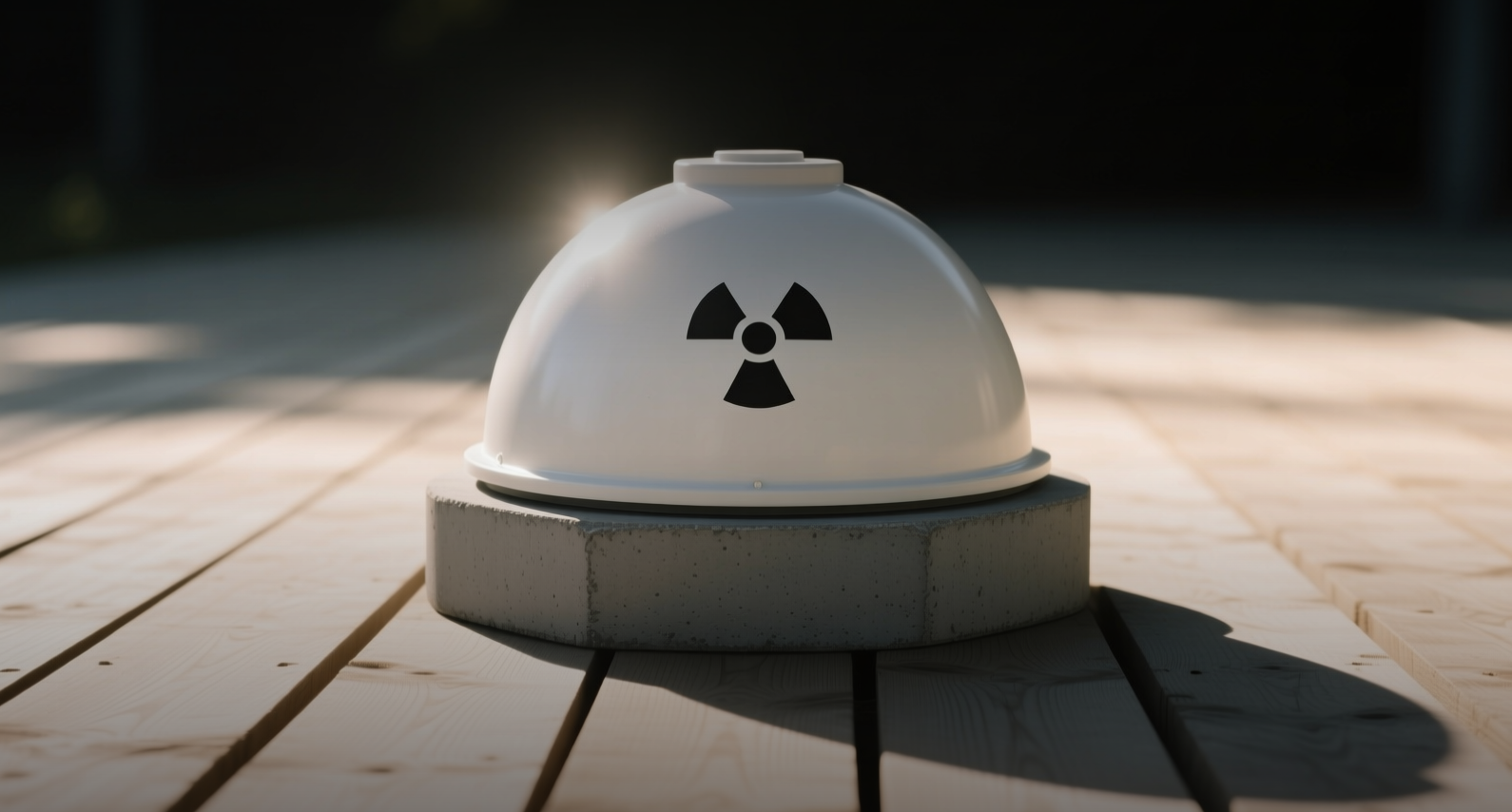
China approves four nuclear projects as Beijing accelerates reactor buildout
China's State Council approved four nuclear power projects including the Liaoning Zhuanghe Phase I plant, extending a buildout that has made Beijing the world's most active reactor developer as data-center demand strains the grid. The decision, announced at an executive meeting chaired by Premier Li Qiang and reported by state broadcaster CCTV, extends a series of approvals Beijing has sustained since 2022 as part of its clean-energy transition. The pace contrasts with the U.S., where the first new reactor in decades — Georgia's Vogtle plant — came online in 2023, seven years late and $17 billion over budget, according to project records. The approvals come as governments worldwide race to expand atomic power to meet surging electricity demand. In the U.S., President Donald Trump has moved to quadruple domestic nuclear output, and the Energy Department in July signed agreements with five states — Tennessee, Louisiana, Oklahoma, Utah and Idaho — to host nuclear waste sites in exchange for federal help developing reactors. Illinois, home to 11 reactors across six plants, lifted a four-decade moratorium on new large-scale plants in January and is soliciting communities to host new facilities. The approvals are a positive for Chinese nuclear equipment makers, engineering contractors and utilities, which stand to benefit from sustained state spending on atomic power. Beijing's target of carbon neutrality by 2060 underpins the buildout, with nuclear filling a baseload role alongside wind and solar. ## Beijing's reactor pipeline China's approval cadence has made it the dominant force in global reactor construction, with the country operating the world's largest fleet of units under construction, according to industry data. The Liaoning Zhuanghe project, in the northeastern province, is among the largest of the newly approved units. China has also exported its Hualong One reactor design to Pakistan and Argentina, extending its influence over the global supply chain for reactor components and fuel. ## Investors eye the nuclear supply chain For investors, the approvals point to continued government support for the nuclear supply chain, from reactor pressure vessels and steam generators to fuel fabrication and grid connections. Chinese state-owned utilities that operate reactors, along with equipment suppliers, are the primary beneficiaries. Construction typically spans five to seven years per unit, giving suppliers multi-year revenue visibility that is rarely matched elsewhere in the power sector. Globally, the nuclear renaissance is gathering pace. The U.S. Energy Department estimates its proposed nuclear campuses could attract up to $50 billion in private investment and generate as much as $10 billion in state and local tax revenues. "These campuses will be massive generators of economic growth ... and be crucial to unleashing America's nuclear renaissance," Energy Secretary Chris Wright said. Small modular reactors — factory-built units typically under 300 megawatts — remain largely unproven commercially, with only two operating worldwide, in Russia and China. This article is for informational purposes only and does not constitute investment advice.

Jul 31 2026, 11:05
Japan's ¥8.45 trillion intervention steadies yen as BOJ decision looms
Japan likely spent about ¥8.45 trillion ($52.8 billion) defending the yen on Thursday, a suspected intervention that drove USD/JPY from near 164 to below 160 just ahead of the Bank of Japan's rate decision. "The brutality of the move — USD/JPY falling from near-164 to sub-160 in a sharp jolt — is as poignant as the timing, just ahead of today's BOJ meeting," said Vishnu Varathan, head of APAC macro strategy at Mizuho. "The timing is no coincidence. Clearly the authorities are pre-emptively warning or insuring against JPY selloff on an expected BOJ hold." The yen was 0.6 percent weaker at 160.51 per dollar on Friday, reversing some of Thursday's 2.4 percent surge. The estimate, based on a comparison of Bank of Japan accounts released Friday and money brokers' forecasts, came as South Korea's foreign exchange authorities also conducted dollar-selling intervention and U.S. authorities performed "rate checks," pointing to a possible coordinated effort. Asian equities rallied, with South Korea's Kospi leaping 14 percent and Japan's Nikkei advancing 5 percent, while long-end U.S. Treasury yields held near 19-year highs. The intervention raises the stakes for the BOJ's decision later Friday. With markets expecting a hold, any surprise move could trigger another sharp yen swing. The operation also signals that Japanese authorities are willing to spend heavily to defend the currency, potentially reshaping carry trade dynamics and cross-border capital flows across Asia. ## Intervention Scale and Coordination The ¥8.45 trillion operation came as the yen had been trading at 40-year lows, with USD/JPY touching levels near 164 before Thursday's sharp reversal. A trader, who declined to be named because they were not authorized to speak to the media, said dollar/yen liquidity was thin on Friday due to nerves over further action from authorities. The coordinated nature of the response is notable. South Korea's foreign exchange authorities conducted dollar-selling intervention on Thursday, while the Nikkei reported that U.S. authorities also conducted so-called "rate checks." This marks a rare instance of multiple authorities acting in concert on currency markets. The intervention also comes against a backdrop of structural yield differentials favoring the dollar. Long-end U.S. Treasury yields held near 19-year highs while short-end yields eased, steepening the curve as doubts grow over the Federal Reserve's ability to anchor inflation expectations. These differentials have been the primary driver of USD/JPY's upward trajectory, with the Bank of Japan continuing to take cautious steps toward normalization while remaining far behind its global peers on rates. ## Market Reaction and Forward Outlook The yen's strength kept pressure on the dollar, leaving the euro perched near a one-month high at $1.1518, while sterling bought $1.3456, holding most of Thursday's 0.7 percent gain. Oil prices edged slightly higher as Middle East tensions persisted, with Brent crude futures up 0.4 percent at $89.38 per barrel and U.S. crude at $83.84. The BOJ's decision later Friday will be the next test. If the central bank holds as expected, the yen could face renewed selling pressure, testing the resolve of Japanese authorities who have now demonstrated a willingness to intervene at scale. If the BOJ surprises with a hike, the yen could strengthen further, potentially unwinding carry trade positions that have been a key source of dollar demand. The broader market context remains fragile. South Korea's Kospi was still set to lose 24 percent in July, its largest monthly loss since 1997, despite Friday's record comeback. The wild swings prompted South Korean authorities to rein in leveraged products that have wiped out savings of some retail investors. "The market sentiment is fragile around the AI debate," said Ji Young Park, senior EM equity portfolio manager at Amundi. "Given the sharp correction we've had across the markets that have AI exposure, we believe we are close to the end of this prolonged volatility." This article is for informational purposes only and does not constitute investment advice.

Jul 31 2026, 11:02
NHTSA probes 1.2 million Teslas as suspension failures raise steering risk
The National Highway Traffic Safety Administration opened a preliminary investigation into about 1.2 million Tesla vehicles Friday after 156 complaints of front suspension detachments that could cause loss of steering control. The regulator's Office of Defects Investigation received complaints alleging the front lower lateral link detached in certain 2018-2020 Model 3 and 2021-2023 Model Y vehicles, NHTSA said. Most complaints indicated there was no advance warning before the failure, though some owners reported noises beforehand, and vehicles often had to be towed after the suspension detached. The reported failures extend beyond the scope of two previous Tesla recalls for lateral link detachments and do not appear to be related to the production issue addressed in those recalls, the regulator said. The preliminary evaluation will examine the underlying cause, scope, and severity of the potential defect. A mandatory recall covering 1.2 million vehicles would rank among the largest in Tesla's history and could carry substantial financial and reputational costs. The probe's outcome will determine whether Tesla faces additional regulatory action, with the investigation potentially setting a precedent for how the agency handles recurring component failures across model generations. ## Third Suspension Probe in Three Years The investigation follows two prior Tesla recalls for lateral link detachments, though NHTSA said the new complaints do not appear tied to the production issue addressed in those actions. The scope of the current probe — spanning Model 3 and Model Y across six model years — suggests the problem may be systemic rather than isolated to a single production batch. The front lower lateral link is a critical suspension component that connects the control arm to the vehicle's subframe, helping maintain wheel alignment and steering stability. A detachment can cause the wheel to shift suddenly, potentially leading to loss of steering control at speed. The fact that failures span six model years and two vehicle platforms points to a potential design or materials issue rather than a one-off manufacturing defect. Tesla did not immediately respond to Reuters' request for comment. The company has faced escalating regulatory scrutiny from NHTSA in recent years, with the agency opening multiple investigations into its driver assistance systems and vehicle components. The preliminary evaluation phase typically lasts several months. If NHTSA determines a safety defect exists, it can escalate to an engineering analysis and ultimately demand a recall. Tesla would have the opportunity to respond and potentially contest the findings before any final action. ## Recall Risk Weighs on Sector The investigation carries direct implications for Tesla's financial position. A recall of 1.2 million vehicles would require parts replacement and labor costs across a fleet spanning multiple model years, potentially running into hundreds of millions of dollars. The probe also raises questions about Tesla's quality control processes, which could affect consumer confidence and resale values. For the broader EV sector, the investigation adds to a pattern of regulatory attention on vehicle safety systems. Rivals including Ford and General Motors have faced their own recalls and probes, but Tesla's rapid production scaling has drawn particular scrutiny from safety regulators. The investigation comes at a sensitive time for Tesla, which has been navigating slowing EV demand and intensifying competition from Chinese manufacturers. Any mandatory recall would add to the company's operational costs and could weigh on its stock price, which has been volatile in recent quarters. The probe also creates uncertainty for Tesla's used-car market, where suspension-related safety concerns could depress resale values across the affected model years. For the broader auto industry, the investigation highlights the regulatory risks inherent in rapid production scaling. As automakers compress development cycles to compete in the EV transition, component durability across diverse operating conditions becomes a growing concern for safety regulators. This article is for informational purposes only and does not constitute investment advice.