Edgen AI operates independently of, and is not controlled by Aspen Digital Financial Limited.
Bank of America to buy UK's MDSec, adding 65 cyber professionals
 Edgen Stock·Jul 30 2026, 21:37
Share to
Share to
Copy link


[1] Bank of America to buy UK's MDSec Consulting to bolster cyber defenses (https://www.reuters.com/legal/litigation/bank ...)[2] Huntsman Announces Third Quarter 2026 Common Dividend (https://www.lelezard.com/en/news-22316683.htm ...)[3] Bloomberg Expands Electronic Trading for Onshore-Listed Australian ETFs, Options and Futures (https://www.lelezard.com/en/news-22316696.htm ...)
Related News

Jul 30 2026, 22:22
Coinbase revenue misses estimates as Q2 net loss hits $359.5 million
Coinbase posted $1.22 billion in Q2 revenue, missing the $1.29 billion consensus, as crypto trading volumes slumped across the industry. "Despite market headwinds, our fundamentals remain strong as we consolidate trading share and continue to build through the cycle," Alesia Haas, chief financial officer at Coinbase, said. The exchange reported a net loss of $359.5 million, or $1.36 per diluted share, narrowing from $394.1 million in the first quarter and $666.7 million in the fourth quarter of 2025. Transaction revenue came in at $599.2 million. Adjusted EBITDA stayed positive for a 14th consecutive quarter at $207.8 million, down from $303.3 million three months earlier. Restructuring costs added $52.4 million after the company cut 700 jobs earlier this year. The results extend a losing streak — three straight quarters in the red — but Coinbase's diversification push is gaining traction. Subscription and services revenue reached $555.1 million, or 48% of net revenue, up from 29% in the fourth quarter of 2024. The company said 88% of net revenue came from sources other than Bitcoin spot trading. Average USDC held in Coinbase products hit a record $20 billion, representing more than 30% of the stablecoin's circulating supply. Trading volume market share climbed to 10.3% from 9.1% in the first quarter, a third consecutive record. Derivatives share also hit an all-time high for the third straight quarter. The gains came as the broader crypto derivatives market contracted by double digits over the same period. Prediction markets did the heaviest lifting, with contracts and revenue both more than doubling quarter over quarter, crossing $100 million in annualized revenue. On the Base layer-2 network, stablecoin transaction volume rose sevenfold year over year. Coinbase co-founder and chief executive Brian Armstrong said the company is "no longer a bet just on the price of Bitcoin." Rival Robinhood saw crypto revenue drop 38% year over year, a sign of the broader industry weakness that Coinbase is navigating through market share gains. Coinbase reduced and narrowed its 2026 adjusted expense guidance. The company now implies GAAP technology, administrative and marketing costs of $4.34 billion to $4.6 billion this year. COIN shares fell 5.44% in after-hours trading to $154.68, erasing a 2.18% regular-session gain that had left the stock at $163.58. This article is for informational purposes only and does not constitute investment advice.
Jul 30 2026, 22:21
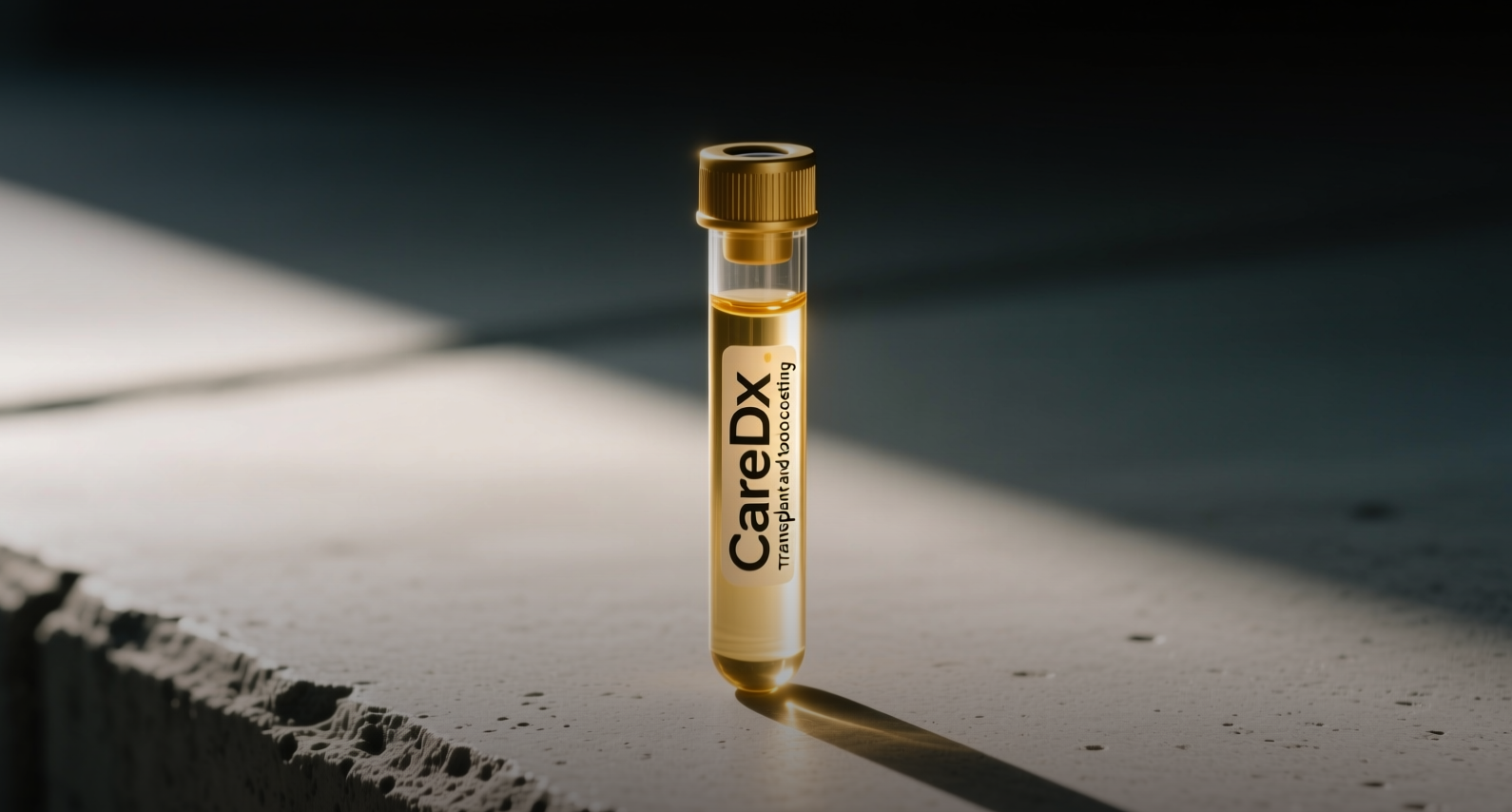
CareDx revenue jumps 52% to $132M as testing services surge
**Key Takeaways:** - Q2 revenue rose 52% to $132M, driven by 61% testing-services growth - Full-year guidance raised to $490M-$500M midpoint, up from $447M-$465M - NavDx acquisition closed July 1, adding specialty oncology platform CareDx Inc. reported second-quarter revenue of $132 million, up 52% from a year earlier, as the transplant diagnostics company expanded testing volumes and completed a strategic portfolio shift with the sale of its lab products business and acquisition of a specialty oncology platform. "The transformation is largely complete," Chief Executive John Hanna said on the earnings call. The company now spans transplant monitoring, specialty oncology and cell therapy applications. Testing-services revenue reached $100 million, a 61% increase from the prior year, with testing volume rising 17% to 58,000 tests. The figure included $15.6 million in out-of-period revenue. Patient and digital solutions contributed $19 million, up 50%, while lab products — divested on June 30 — added $13 million. Non-GAAP gross margin expanded 510 basis points to 74%, and adjusted EBITDA more than quadrupled to $25 million, or 19% of revenue, from $5 million a year earlier. GAAP net income was $111 million, or $2.07 per diluted share, reflecting a $113 million gain on the lab products sale. The company ended the quarter with $374 million in cash and no debt. CareDx raised its full-year 2026 revenue outlook to a range of $490 million to $500 million, up from $447 million to $465 million previously. At the $495 million midpoint, that represents 30% year-over-year growth. Adjusted EBITDA guidance was lifted to $66 million to $78 million from $43 million to $57 million. The company also removed a previously embedded $7.5 million potential impact from the Medicare Local Coverage Determination after the policy was finalized, affirming coverage for surveillance molecular testing in kidney, heart and lung transplantation. The company closed the Naveris acquisition for about $162 million on July 1, adding the NavDx circulating tumor HPV DNA test for head and neck cancer monitoring. CareDx expects specialty oncology volumes in the second half to increase about 30% from the prior year and sees average selling prices moving toward $1,000 to $1,100 over time. Pipeline programs remain on track, with AlloHeme — a blood-based relapse monitoring test for acute myeloid leukemia and myelodysplastic syndromes — expected to complete CLIA readiness by year-end for a 2027 commercial launch. HistoMap Kidney is slated for a clinical study this year with broader availability planned for 2027. Shares rose 7.77% to $38.16 in regular trading and gained an additional 9.11% to $41.57 after hours, pushing past the prior 52-week high of $40.47. The guidance raise signals management expects transplant testing demand and the NavDx integration to drive continued momentum. Investors will watch third-quarter results for early evidence of specialty oncology revenue contribution and progress on AlloHeme's commercial readiness. This article is for informational purposes only and does not constitute investment advice.

Jul 30 2026, 22:09
Apple's Cook wants more DRAM suppliers as 3 giants squeeze supply
**Apple's supply chain flexibility is at its lowest point in years, and CEO Tim Cook is publicly calling for more DRAM suppliers to break the grip of the three companies that control the global memory market.** Apple Chief Executive Officer Tim Cook said the company's supply chain is less flexible than usual, with the bottleneck concentrated in leading-edge chip production at Taiwan Semiconductor Manufacturing Co. The comments, made during an interview, come as Apple navigates the worst memory chip shortage in a decade — a crunch that has already forced price hikes of 17 percent to 25 percent across Macs, iPads and other devices in June. "The DRAM market is dominated by three suppliers," Cook said. "If there were more suppliers, that would be a good thing — it would help improve our supply situation." He stopped short of saying whether additional suppliers would lower pricing, noting the impact on cost "is not yet clear." The three suppliers Cook referred to are Samsung Electronics Co., SK Hynix Inc. and Micron Technology Inc., which together control more than 95 percent of the global DRAM market. Their output has been increasingly diverted to high-bandwidth memory (HBM) for AI data centers, squeezing supply for consumer electronics. SK Hynix recently cemented a $950 billion AI chip deal with Nvidia Corp., Broadcom Inc. and others, locking up HBM capacity and further tightening consumer-grade supply. The result: Apple's cost of goods sold has risen sharply, and Jefferies analysts estimate the gross margin on each iPhone 17 could drop by 4 to 9 percentage points if prices stay flat. **The Political Wrinkle: Washington Blocks the Chinese Option** Apple's natural hedge against the Big Three's pricing power would be to qualify new suppliers. Two Chinese firms — ChangXin Memory Technologies (CXMT) and Yangtze Memory Technologies Co. (YMTC) — have the capacity to fill the gap. CXMT, which completed a blockbuster Shanghai IPO this week and surged 531 percent on its debut, is now mainland China's largest company by market capitalization. YMTC, a NAND flash specialist, was the subject of Apple's aborted 2022 sourcing effort. But a bipartisan group of US senators, led by Indiana Republican Jim Banks and New York Democrat Chuck Schumer, gave Apple until August 21 to formally commit to avoiding chips from both firms. Both appear on the Pentagon's updated 1260H list of Chinese military companies. The lawmakers called Apple's plan "short-sighted," warning that "once a part clears qualification for Apple production, extending it worldwide is a single procurement decision away." They also pressed Apple on whether it shared intellectual property with either firm during component qualification — a transfer that may require a Commerce Department license. The political pressure leaves Apple with few options. Micron has lobbied the administration to reject any Apple-CXMT deal, arguing it would undermine domestic memory production and planned investments in Indiana, Idaho, New York and Virginia. For US investors, CXMT is not directly accessible — it trades only on the Shanghai exchange — leaving Micron and SK Hynix as the primary public-market plays on the memory boom. **Margin Math: Can Apple Pass the Cost to Consumers?** Apple's gross margin guidance for the fiscal third quarter, reported Thursday after the bell, will offer the clearest signal of how the company is managing the crunch. In April, Apple guided Q3 gross margin in a range of 47.5 percent to 48.5 percent. If management guides higher for the current quarter, it would signal that Apple can pass cost increases to consumers without destroying demand — a hallmark of its pricing power. The June price hikes, which take effect in August, won't weigh on Q3 device sales. But the iPhone 18 lineup, expected in September, will be the real test. Jefferies estimates Apple would need to raise prices by 18 percent to 26 percent on the Pro and Pro Max models just to keep gross margin from contracting by 3.5 percentage points. Apple shares closed at $338.19 on July 30, down 0.56 percent, and slipped further in pre-market trading to $336.39. The stock has gained 24 percent year to date, outpacing the S&P 500's roughly 7 percent advance, supported by a $5 trillion market cap and a services business that provides a hedge against hardware margin pressure. For investors, the question is whether Apple's brand loyalty and carrier subsidies can absorb another round of price increases — or whether the memory crunch, compounded by Washington's blockade of Chinese suppliers, will finally test the limits of the company's pricing power. This article is for informational purposes only and does not constitute investment advice.