Edgen AI operates independently of, and is not controlled by Aspen Digital Financial Limited.
Australian jobs surge 76,300 in June, cementing bets on RBA rate rise
 Edgen Stock·Jul 23 2026, 06:23
Share to
Share to
Copy link

[1] AUD/USD Price Forecast: Looks to build on upbeat Aussie jobs data-led gains above 0.7000 (https://www.fxstreet.com/news/aud-usd-price-f ...)[2] Australia jobs surge in June, unemployment steady as more look for work (https://www.msn.com/en-us/money/other/austral ...)[3] ASX loses ground on back of jobs data; Miners, James Hardie advance (https://www.smh.com.au/business/markets/asx-s ...)[4] Employment surges in June, leaving the door open to further interest rate rises (https://theconversation.com/employment-surges ...)
Related News
Jul 23 2026, 07:42
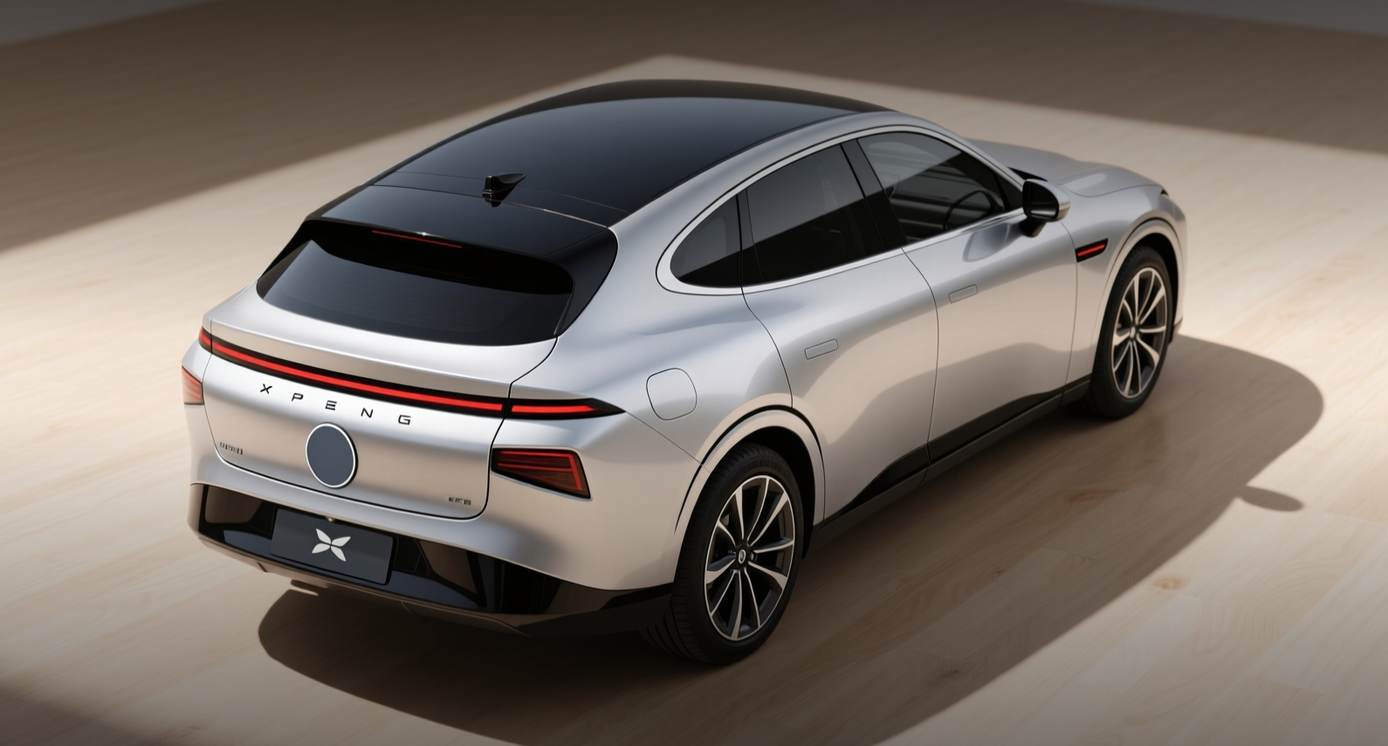
XPeng delivers 103,000 vehicles as CEO charts robotics pivot
Chinese electric-vehicle maker XPeng is pivoting from pure battery-powered cars to vehicles integrated with robotics, Chief Executive He Xiaopeng said, positioning the company at the intersection of two high-growth sectors. "America will be one of the most important markets that we have to enter because it will help us to grow better," Xiaopeng told WardsAuto, outlining ambitions that extend beyond China and Europe. XPeng delivered 103,295 vehicles in the first six months of the year, nearly double the 52,200 delivered in the same period a year earlier. The company is expanding across Europe and plans to enter Canada as a precursor to a potential US launch, though significant political barriers remain. The strategic shift could boost XPeng's valuation by placing it at the center of two expanding markets — the global EV industry, valued at more than $1 trillion, and the robotics sector, where Chinese companies are investing heavily. If successful, the move would differentiate XPeng from domestic rivals such as BYD and Nio, which have focused primarily on battery technology and autonomous driving features. **Robotics as the Next Chapter** Chinese carmakers spent the past decade replacing gasoline engines with batteries. The next decade will be about integrating cars with robotics, Xiaopeng said, framing the shift as a natural evolution of the industry rather than a departure from its core business. XPeng has already invested in robotics research, including humanoid robots and autonomous driving systems that share underlying technology with its vehicles. The robotics push comes as Chinese automakers face increasing trade barriers in Western markets. The US has effectively blocked Chinese EV imports through a combination of tariffs and regulatory hurdles, a stance that enjoys bipartisan support in Washington. Polestar, the Swedish-Chinese brand backed by Geely, built a factory in South Carolina and still faced import restrictions, highlighting the political sensitivity around Chinese-connected vehicles. Xiaopeng said XPeng would consider building factories in the US if policy allowed. "If the US policy allows for companies like us to stay or enter the market and build factories there, definitely we'll embrace that decision," he said. President Donald Trump has sent mixed signals on Chinese auto investment, at times welcoming factory construction while maintaining tariff barriers. **Canada as a Gateway** Canada will serve as a test market for North American expansion. Alex Tang, XPeng's head of international development and service, said the company needs to "evaluate and plan" to enter Canada with a "long-term strategy to be there as a long-term brand." A successful Canadian launch could provide a template for a future US entry, though no timeline has been set. The robotics pivot also reflects a broader trend among Chinese EV makers seeking new revenue streams as the domestic market matures and price competition intensifies. BYD has slashed prices repeatedly over the past year, compressing margins across the industry. XPeng's move into robotics mirrors similar efforts by Tesla, which has positioned its Optimus humanoid robot as a potential long-term business beyond its automotive core. **Investor Implications** For investors, the question is whether XPeng can execute on two capital-intensive fronts simultaneously. The company's H1 delivery figure of 103,295 vehicles represents strong year-over-year growth but remains well behind BYD's 1.6 million units and Nio's 87,426. XPeng trades at a discount to some peers as it navigates the transition from pure EV maker to a broader technology company. The robotics strategy, if realized, could open a new valuation pathway — but it also carries execution risk and requires sustained investment in research and development. This article is for informational purposes only and does not constitute investment advice.

Jul 23 2026, 07:42
UniCredit targets Q4 Commerzbank takeover as stake hits 48%
UniCredit now controls 48 percent of Commerzbank after its low-ball offer and open-market purchases, and Chief Executive Officer Andrea Orcel said a full acquisition could come as soon as the fourth quarter. "That would mark the moment when we go in," Orcel told CNBC's Carolin Roth, adding that the Italian lender would not wait for Commerzbank's annual general meeting in May 2027. "Potentially" in the fourth quarter, "maybe later," he said. UniCredit posted better-than-expected second-quarter net profit of €2.9 billion, beating the €2.8 billion average analyst estimate, and raised its 2026 income guidance to well above €11 billion. The bank said its Commerzbank investment would return 15 percent, exceeding the expected return from the €4.75 billion share buyback it has now canceled. The deal would create one of Europe's largest banking groups by assets, combining UniCredit's Italian and Eastern European operations with Commerzbank's German corporate lending franchise. The outcome now hinges on a regulatory verdict that will determine whether the combined entity moves forward or Commerzbank charts an independent course. **The Regulatory Pivot** UniCredit's official takeover offer, which expired July 3, drew just 17.6 percent of Commerzbank shares. Among independent institutional and retail investors, acceptance stood at under 2 percent. The bulk of UniCredit's 48 percent position came from earlier open-market purchases and derivative positions rather than the tender process itself. Jefferies Financial Group pushed its voting rights past the 10 percent threshold on July 20, confirming a 10.02 percent stake through share purchases and financial instruments. The move signals that institutional investors continue to bet on a resolution to the takeover saga. Commerzbank shares closed at €37.80 on July 22, up 2.72 percent, roughly 3.5 percent below the 52-week high of €39.18 reached July 14. The stock trades 8.63 percent above its 200-day moving average of €34.66, with a relative strength index of 51.3 — neutral territory that leaves room for further upside. **Commerzbank Fights Back** Commerzbank's management raised its 2026 net profit target to at least €3.4 billion, up from a previous forecast of more than €3.2 billion. For the 2026-2028 period, the bank intends to distribute nearly 100 percent of profit after AT1 coupon deductions through dividends and share buybacks — a move that could make the stock harder to acquire at a discount. Analyst views diverge ahead of Commerzbank's second-quarter results due Aug. 6. RBC Capital Markets' Anke Reingen rates the stock Outperform with a €43 price target. Deutsche Bank's Benjamin Goy backs a Buy call at €42, citing expected earnings growth and a new buyback program. JPMorgan's Kian Abouhossein maintains a Neutral stance at €37, pointing to stable profit forecasts for 2026-2028. The spread of targets from €37 to €43 reflects the uncertainty that only regulators can resolve. If the deal proceeds, UniCredit would gain a dominant position in German corporate banking. If blocked, Commerzbank's independent strategy — built on record profitability and full profit distribution — gives shareholders a credible alternative. This article is for informational purposes only and does not constitute investment advice.

Jul 23 2026, 07:40
Tesla drops 4% after record deliveries fail to ease spending fears
Tesla reported record quarterly deliveries but shares slid 4% after hours, erasing $71 billion in market value on concerns over CEO Elon Musk's spending. "The results validate our long-term strategy, but the market is focused on near-term capital allocation," Morgan Stanley analysts led by Adam Jonas said in a note, maintaining their overweight rating and $417 price target. Adjusted earnings per share came in at $0.33 for the second quarter, missing the $0.51 consensus estimate compiled by Visible Alpha. Free cash flow turned negative at $1.09 billion, reflecting what Musk has described as more than $25 billion in planned capital expenditures for the year across Tesla's six factories producing vehicles, batteries and robots. The company did not disclose quarterly revenue or vehicle delivery figures in its preliminary release. The selloff underscores a shift in investor focus from operational milestones to capital allocation discipline. Tesla's price-to-earnings ratio of 343 times compares with a five-year median of 107 times, according to GuruFocus data, suggesting the stock already priced in perfection before the miss. Insider sales totaling $12.4 million over the past three months add to the caution. Shares have declined 17% year to date. Investors will watch the full earnings call on July 23 for updated margin data and delivery guidance for the second half of the year. This article is for informational purposes only and does not constitute investment advice.