Edgen AI operates independently of, and is not controlled by Aspen Digital Financial Limited.
ANTA Sports Q2 retail sales rise as smaller brands surge 30%
 Edgen Stock·Jul 17 2026, 09:52
Share to
Share to
Copy link


[1] ANTA SPORTS: ANTA Branded Retail Sales Record Low-single Digit Positive Growth YoY in 2Q (https://www.aastocks.com/en/stocks/news/aafn- ...)[2] Anta Brand CEO Xu Yang Steps Down, Lai Shixian Named Interim Leader (https://www.msn.com/en-us/money/companies/ant ...)[3] ANTA Sports Posts Steady Core Growth and Strong Gains at Smaller Brands in First Half of 2026 - TipRanks (https://www.tipranks.com/news/company-announc ...)
Related News

Jul 17 2026, 10:47
Loeffler reaps millions from SpaceX IPO after nomination
Kelly Loeffler, the U.S. Small Business Administration head, multiplied her SpaceX stake into millions after her nomination, a Reuters review of financial disclosures shows, raising ethics questions about officials profiting from companies they oversee. The financial disclosure documents, reviewed by Reuters, show Loeffler held SpaceX shares before her nomination and that the value of her stake increased substantially after, multiplying by several times by the time of the company's record IPO in June. The exact dollar amount was not specified in the filings, but the gain was described as "millions." SpaceX raised about $86 billion in its June 12 debut, pricing shares at $135. The stock initially surged to above $200, briefly valuing the company at more than $2 trillion, before falling back. Shares closed Wednesday at $135.27, near the IPO price, after dipping below $133 intraday. The stock has fallen 41% from its peak of $225.64. The gain for Loeffler, who as SBA head oversees programs supporting small businesses that may compete with or supply SpaceX, could fuel calls for stricter ethics rules governing financial holdings by presidential appointees. The SBA administers loan programs and contracting rules that could affect companies across the space and defense sectors. **Stake Multiplied After Nomination, Filings Show** The financial filings, which cover Loeffler's assets and income, show her SpaceX investment was held prior to her nomination and grew significantly in value after, according to Reuters. Loeffler, a former U.S. senator from Georgia, was nominated by President Donald Trump to lead the SBA in 2025. Her office did not immediately respond to a request for comment. Federal ethics rules require presidential appointees to disclose their assets and recuse themselves from matters that could affect their financial holdings. The Office of Government Ethics reviews these disclosures, but enforcement relies largely on self-reporting by appointees. **IPO Raised $86 Billion, Stock Later Fell 41%** SpaceX's IPO was the largest in U.S. history, raising about $86 billion. The stock debuted on the Nasdaq on June 12 at $135 per share and quickly rallied, reaching a high of $225.64 within days. At its peak, the company's market capitalization exceeded $2 trillion, rivaling tech giants such as Amazon and Microsoft. Since then, the stock has given back most of those gains. Shares have fallen for several consecutive weeks, closing Wednesday at $135.27 after briefly dipping below the IPO price to $132.75, according to data compiled by Reuters. The decline reflects a broader reassessment of high-growth tech valuations and concerns about the company's path to profitability. Only about 4% of SpaceX's total shares are publicly traded, a small float that has contributed to the stock's volatility, analysts said. The company's first earnings report as a public company will be a key test for the stock, with investors watching for signs of profitability and revenue growth from its Starlink satellite business and launch services. **Rules Require Recusal but Rely on Self-Reporting** The case highlights potential conflicts of interest when government appointees hold investments in companies that may be affected by their agencies' policies. The SBA administers loan programs and contracting rules that could impact SpaceX's business operations, including small business set-aside programs that determine which companies can compete for federal contracts. The Loeffler disclosures come as other high-profile IPOs, including OpenAI and Anthropic, are being prepared, raising broader questions about political insiders profiting from the private-market boom. SpaceX's record debut has set the table for these offerings, and the stock's subsequent decline has made it a bellwether for investor appetite for high-growth, high-profile listings. This article is for informational purposes only and does not constitute investment advice.

Jul 17 2026, 10:44
PBF Energy surges 10.5% as crack spreads hit $69 on Hormuz crisis
PBF Energy shares jumped 10.5% this week as the benchmark 3-2-1 crack spread surged to nearly $69 a barrel, the highest level in years, after the collapse of a memorandum of understanding with Iran intensified disruptions to crude flows through the Strait of Hormuz. "The widening crack spread reflects a dual supply shock — crude and refined products are both being squeezed by the Strait's effective closure," said Omar Tariq, an energy analyst covering oil and gas markets. "PBF's advantage is its access to domestic crude, which lets it capture the full benefit while competitors reliant on seaborne barrels struggle." The 3-2-1 crack spread — which measures the difference between the price of two barrels of gasoline and one barrel of diesel against three barrels of crude — has more than tripled from about $20 at the start of 2026. It stood at roughly $43 as recently as early June, before optimism over a potential resolution to the Iran conflict faded. The Strait of Hormuz, a narrow waterway between Iran and Oman that normally carries about one-fifth of the world's energy shipments, has been mostly blocked since the conflict began on Feb. 28 with U.S. and Israeli strikes on Iran, according to Reuters. The disruption is not limited to crude oil. Gulf countries are major producers of refined products such as jet fuel and diesel, meaning the Strait's effective closure has choked supply on both ends of the refining value chain. For PBF Energy, which sources most of its crude from domestic U.S. fields, the dynamic has been a windfall: the company's stock has surged roughly 125% in 2026 as crack spreads widened. International Energy Agency Executive Director Fatih Birol warned Thursday that the world should be "worried" about energy security if the Strait does not reopen in the next few weeks, speaking at a Council on Foreign Relations event. Birol noted that several factors have moderated the price rise so far — including China's stockpile of more than 1 billion barrels accumulated before the war, an IEA-coordinated release of up to 400 million barrels in March, and increased U.S. production — but said those fixes "can't last forever." The IEA's March release knocked about $20 off oil prices, and Birol said the organization still has 80% of its reserves available to tap if conditions worsen. However, U.S. production increases of 1 million to 2 million barrels per day cannot fully replace the roughly 17 million barrels of oil and refined products that typically transit the Strait daily, he said. The impact has been asymmetric: Asia, which received 80% to 90% of its energy from the Strait before the conflict, has been hit hardest, with developing nations including Pakistan, Bangladesh and India suffering the most severe economic pain. For PBF Energy, the key question is duration. The longer the Strait remains restricted, the more the refiner stands to benefit from elevated crack spreads. But a prolonged disruption also carries risks: sustained high fuel prices could erode demand, while a diplomatic resolution could send crack spreads collapsing as quickly as they rose. U.S. refiners are already operating near capacity, increasing the risk of unplanned outages that could add further volatility to an already stretched market. This article is for informational purposes only and does not constitute investment advice.
Jul 17 2026, 10:43
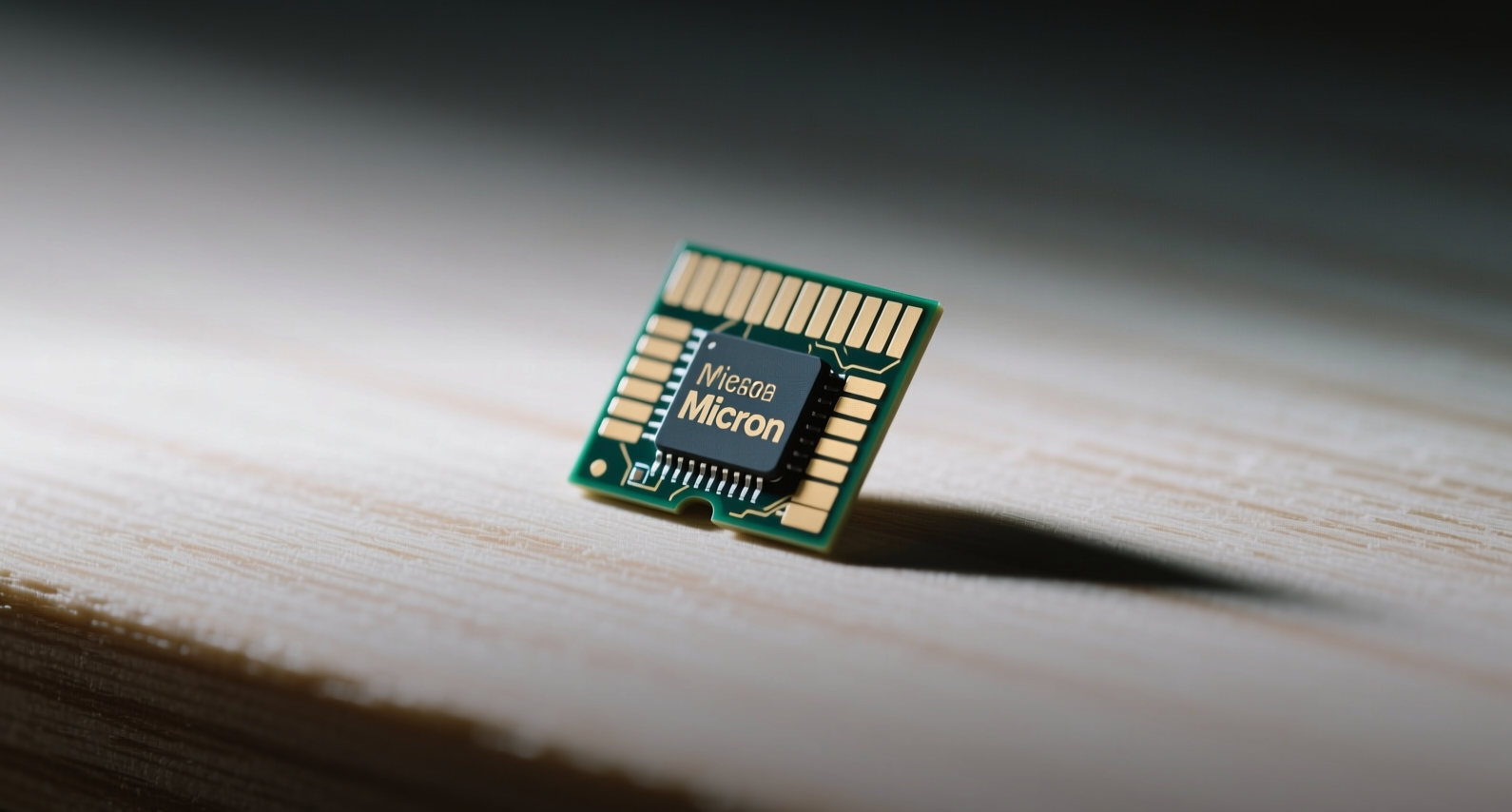
Jim Cramer warns 3 stocks face margin calls by Monday
Jim Cramer warned investors who bought Micron Technology, Corning, and Seagate Technology on margin that they face forced liquidation by Monday. "Get out now, before the margin clerks make the decision for you," Cramer, host of CNBC's "Mad Money," said in a July 17 broadcast. The warning targets three stocks that have drawn significant retail interest. Micron, a Boise-based memory-chip maker competing with Samsung Electronics and SK Hynix, has been a favorite among traders betting on the artificial intelligence-driven memory recovery. Corning, the specialty glass and materials company supplying Gorilla Glass to Apple and optical fiber to telecom carriers, has also attracted leveraged positions. Seagate Technology, a data-storage firm rivaling Western Digital, rounds out the list. Margin calls could trigger cascading selling in these names, compounding losses for retail traders who bought on borrowed money. With markets potentially facing a volatile Monday session, investors holding leveraged positions risk being forcibly closed out at unfavorable prices, potentially accelerating downside moves across the semiconductor and hardware sectors. Cramer's warning comes as the broader semiconductor sector faces headwinds from AI-driven supply chain shifts and demand uncertainty. Micron, which has seen its shares rally on expectations of a memory-chip recovery driven by data-center spending from hyperscalers such as Microsoft and Amazon, could see heightened volatility as margin positions unwind. The warning also extends to Corning and Seagate, both of which have benefited from data-center infrastructure spending tied to artificial intelligence. Any forced selling in these names could amplify downside moves, particularly if multiple margin calls are triggered simultaneously across retail brokerage accounts. For investors, the episode shows the risks of leveraged bets in volatile tech names. A sharp move lower — or even a gap down at Monday's open — could wipe out positions before traders have a chance to respond, a dynamic that has played out repeatedly in high-momentum stocks during past market dislocations. This article is for informational purposes only and does not constitute investment advice.