Edgen AI operates independently of, and is not controlled by Aspen Digital Financial Limited.
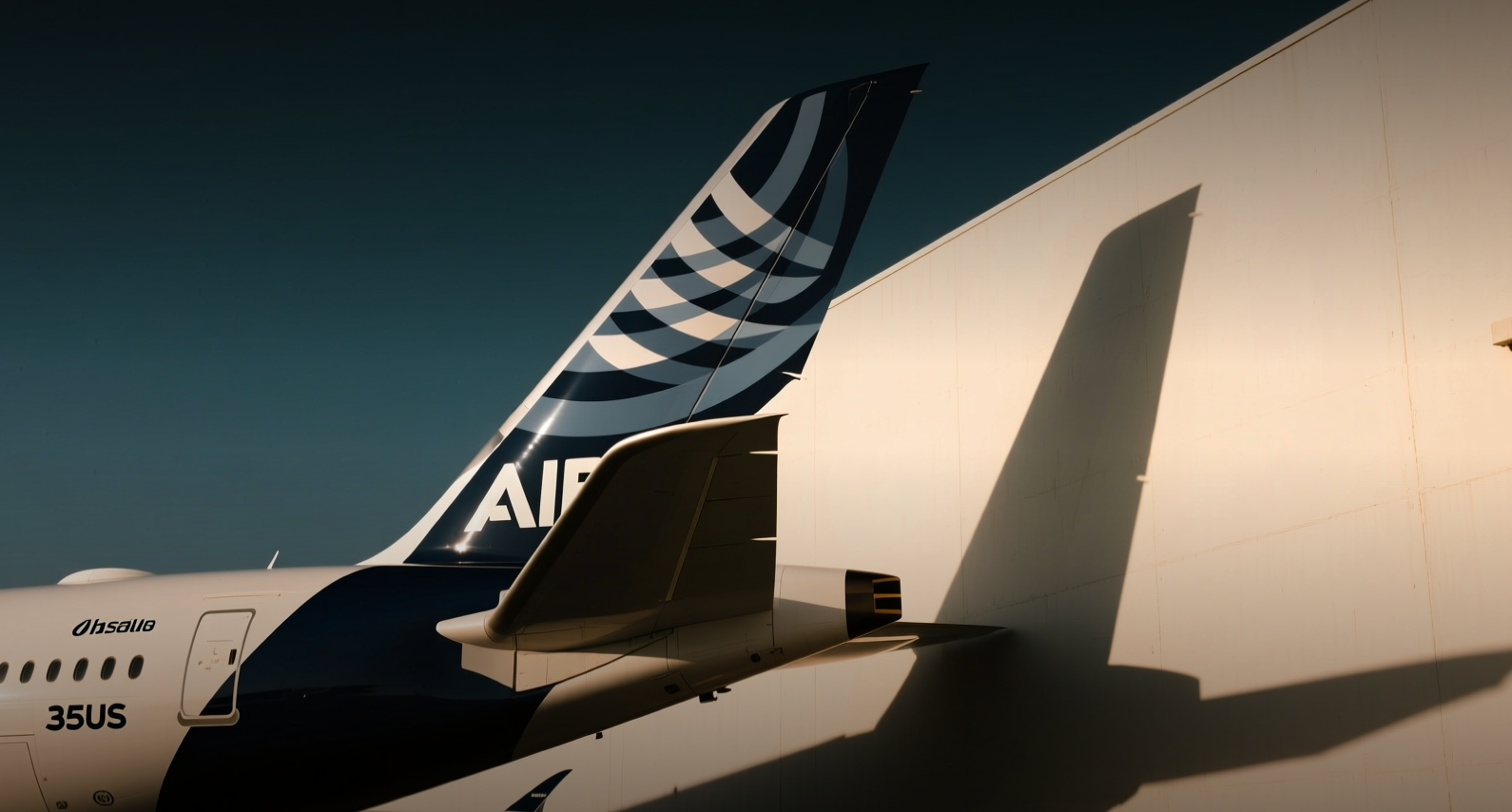
Airbus launches €5B buyback as it targets near-doubling of profit by 2029
 Edgen Stock·Jul 22 2026, 07:40
Share to
Share to
Copy link

[1] Airbus shares jump after share buyback launch, new guidance (https://www.reuters.com/business/aerospace-de ...)[2] Exclusive-Boeing asks US to intervene over record EU loan to Airbus (https://www.msn.com/en-us/money/economy/exclu ...)[3] Airbus Targets Earnings Boost, Buyback to Help Lift Stock (https://www.bloomberg.com/news/articles/2026- ...)[4] Airbus Soars: Ambitious Profit and Share Buyback Plans Unveiled (https://www.devdiscourse.com/article/business ...)[5] Airbus Sets Midterm Profitability Goal (https://www.morningstar.com/news/dow-jones/20 ...)
Related News

Jul 22 2026, 08:43
USD/CAD tests 1.4115 as safe-haven demand offsets higher oil prices
**Geopolitical risk in the Middle East is reshaping the usual relationship between oil prices and the Canadian dollar, pushing USD/CAD toward a key technical level.** The US dollar extended its recovery against the Canadian dollar to near 1.4101 on Tuesday, with safe-haven demand from escalating Middle East tensions outweighing the Canadian dollar's traditional support from Brent crude above $90 a barrel. "The dollar bid reflects a geopolitical risk premium that has overwhelmed the usual oil-CAD correlation," said Karl Schamotta, chief market strategist at Corpay. "As long as Strait of Hormuz disruptions remain in play, the loonie will struggle to benefit from higher crude prices." Brent crude futures climbed to a six-week high above $94 a barrel after threats to shipping through the Strait of Hormuz, which handles about 21% of global oil trade, raised supply concerns. The 10-year US Treasury yield rose to 4.64%, while gold advanced 0.9% to $4,113.73 an ounce, reflecting broad safe-haven demand. The Japanese yen weakened past 163 per dollar, its lowest level in almost four decades. A sustained break above 1.4115 would signal the end of the recent pullback from 1.4247 and open the door for a retest of that July high, according to ActionForex. Failure to clear that level could trigger profit-taking, with the 1.3954 support area providing the next floor. ## Why Oil Is No Longer Supporting the Loonie Canada is one of the world's largest crude exporters, and rising oil prices typically boost the Canadian dollar by improving the country's trade balance. Brent crude has remained above $90 a barrel since mid-July, yet USD/CAD has continued climbing. The divergence reflects a shift in market dynamics. Geopolitical uncertainty has strengthened the US dollar across the board, with the dollar index gaining as investors seek safe-haven assets. At the same time, expectations that the Federal Reserve will keep interest rates restrictive for longer have pushed US Treasury yields higher, further supporting the greenback. "Higher oil prices are fueling inflation concerns rather than boosting the loonie," Schamotta said. "That is the key difference this time compared with previous oil-driven rallies." ## The 1.4115 Threshold and What Comes Next The 1.4115 level has emerged as the key technical battleground for USD/CAD. The pair pulled back from 1.4247 in early July but has recovered steadily over the past several sessions, erasing most of those losses. A decisive move above 1.4115 would confirm that the corrective phase has ended and increase the probability of another test of the July high. Conversely, rejection at that level could trigger a short-term pullback toward 1.3954, which has provided support during the recent consolidation. The last time USD/CAD traded above 1.41 for an extended period was in early 2020, when pandemic-driven risk aversion pushed the pair above 1.46. The current move is more measured but reflects a similar dynamic: geopolitical risk overwhelming commodity-linked currency support. The near-term direction depends on three factors: developments in the Middle East, US economic data that could shift Fed rate expectations, and the trajectory of crude oil prices. If Brent remains above $90 and geopolitical tensions persist, the dollar is likely to maintain its advantage over the loonie, keeping USD/CAD biased toward the 1.4247 high. This article is for informational purposes only and does not constitute investment advice.

Jul 22 2026, 08:37
Reach shares crash 19% as Google AI answers crush search traffic
**The 40% collapse in page views at Reach PLC, publisher of the Mirror and Daily Star, marks the clearest signal yet that Google's AI-generated answers are structurally destroying the economics of digital publishing.** Reach PLC (LSE:RCH) shares fell 19% to 47.72p on Wednesday after the publisher of the Mirror, Express and Daily Star reported half-year results showing a 40% collapse in page views driven largely by Google's AI-generated search answers. Revenue for the six months to June 30 fell 9% to £232.9 million, with digital revenue dropping 11.4% to £54.2 million. "The shift is visible and consistent enough across categories to be structural rather than cyclical," said Rubeena Singh, managing director of digital marketing agency NP Digital India. "Google Search sent users to publisher destinations. AI platforms consume the content, synthesize the answer, and retain the user within their own interface." The 19% share price rout wiped roughly £60 million from Reach's market value, showing investor fear that AI-generated summaries are permanently severing the link between search queries and publisher traffic. Similarweb data shows zero-click news searches rose from 56% to nearly 69% after Google launched AI Overviews, while Bain & Company estimates 80% of consumers now rely on AI-generated results for at least 40% of their searches, contributing to a 15% to 25% decline in organic web traffic across many sectors. **The Publisher Traffic Crisis** Reach's results are the most dramatic single-company data point in a trend that has been building since Google began rolling out AI Overviews in 2024. Pew Research Center found that when an AI summary appears, users click on traditional search result links in just 8% of visits, compared with 15% when no summary is present. Session abandonment occurs on 26% of pages with AI summaries, versus 16% on traditional results pages. The implications extend well beyond Reach. The New York Times has sued OpenAI and Microsoft over copyright, while more than a third of leading news publishers have blocked OpenAI's crawlers. In India, the Federation of Indian Publishers has approached the Delhi High Court over copyright concerns. Yet blocking crawlers does nothing to stop Google's AI from summarizing publisher content in search results — a dynamic that requires regulatory rather than technical solutions. **The Structural Pivot for Marketers** The IAB's 2026 Outlook Study found that 73% of marketers now prioritize creating content specifically optimized for AI-generated answers, up from virtually zero two years ago. Google's own data shows search ad revenue rose 19% year-over-year in Q1 2026, driven by query growth from AI features — even as the traffic those queries generate bypasses publisher websites entirely. For Reach, the path forward is unclear. The company is leaning on cost-cutting to protect profits, but a 40% traffic decline cannot be offset by expense reduction alone. Publishers that survive the transition will likely need to build direct reader relationships through newsletters, podcasts, and memberships — channels that bypass algorithm-driven discovery entirely. The alternative is continued dependence on a Google search ecosystem that increasingly keeps answers — and the economic value they generate — for itself. *This article is for informational purposes only and does not constitute investment advice.*
Jul 22 2026, 08:34
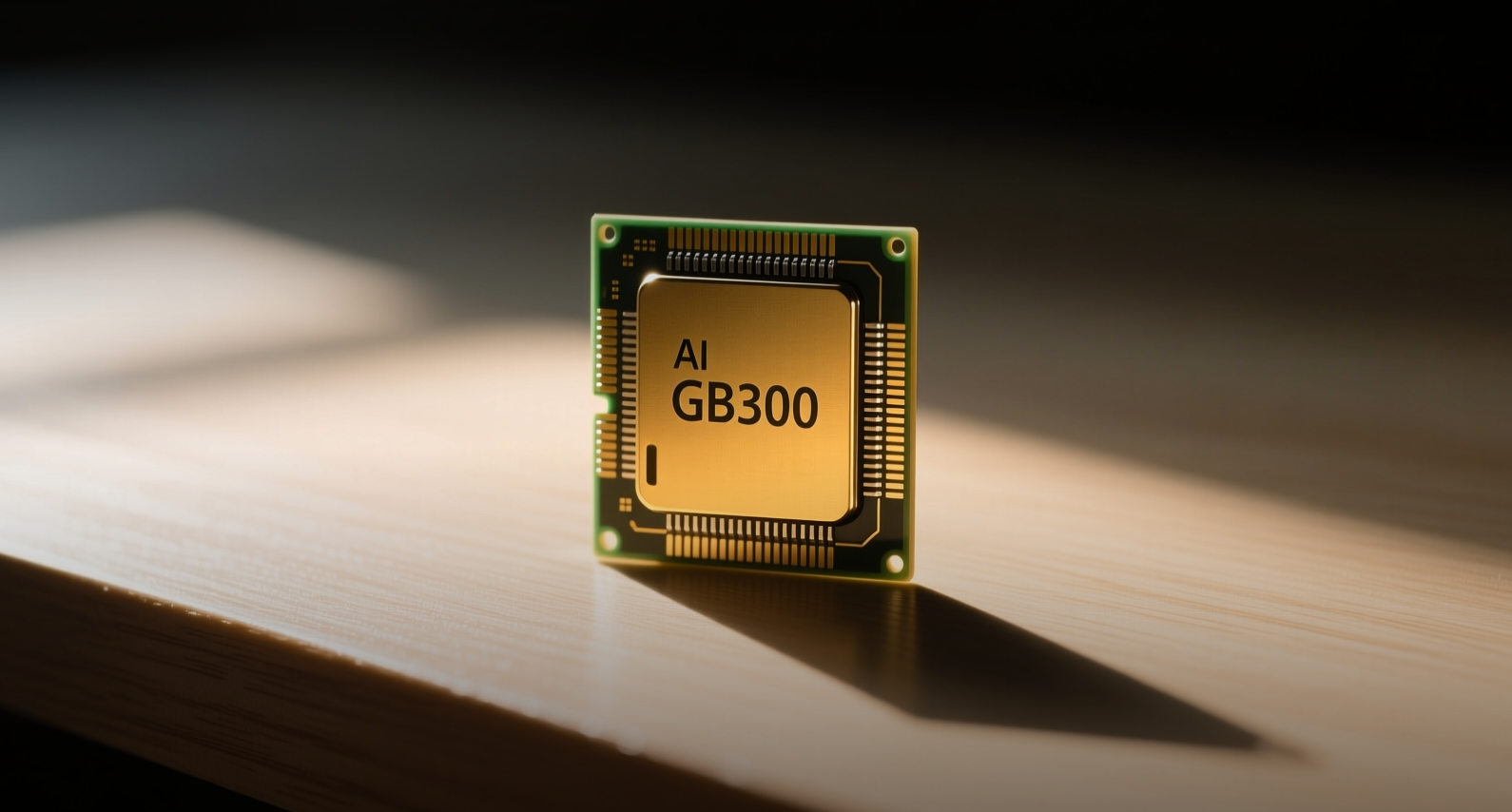
Nvidia's Blackwell GB300 hits 1,648 TFLOPs per GPU as software optimizations compound
Nvidia's GB200 NVL72 rack systems running DeepSeek R1 0528 achieved a 4x improvement in tokens per second per megawatt over three months, driven entirely by software optimizations that the company says apply to more than 90 percent of AI models. "These results come from a platform whose hardware, interconnect, and software are designed together and continuously optimized," Nvidia said in a technical blog post detailing the benchmarks. "The record-setting performance of today is only the foundation for even higher performance tomorrow." The gains stem from 38 major optimizations tested across 250,000 simulated configurations, consuming 1.4 million GPU hours. On the training side, the GB300 NVL72 — Nvidia's Blackwell Ultra rack — set a world record on DeepSeek-V3 671B pre-training at 1,648 TFLOPs per GPU across 256 GPUs, nearly three times the 606 TFLOPs delivered by the prior-generation GB200. The same hardware has improved 1.5x in six months through software updates alone. The dual-generation strategy — extracting more value from deployed Blackwell systems while rolling out Vera Rubin, which offers roughly 10x the token throughput at equivalent power — strengthens Nvidia's competitive position against Advanced Micro Devices and custom ASIC rivals such as Google's TPU and Amazon's Trainium. Nvidia shares trade at roughly 35x forward earnings, and the continued software-driven performance gains could push analyst estimates higher as customers see extended return on invested capital. **Software optimizations compound across frameworks** The performance improvements are not limited to Nvidia's proprietary Megatron Core framework. On TorchTitan, PyTorch's native training stack, the GB300 NVL72 delivered 1,197 TFLOPs per GPU on DeepSeek-V3 671B — a 6x improvement versus the unoptimized baseline of 199 TFLOPs. JAX, the Google-backed framework popular in research, showed an even steeper trajectory: throughput rose to 4,082 tokens per second per GPU in July 2026 from 418 in January, a 10x gain that translates to 1,025 TFLOPs per GPU. Nvidia engineers contributed directly to both open-source frameworks, landing optimizations that compound over time. The company said it has run more than 250,000 simulated configurations to identify the most effective changes, with over 90 percent of the 38 optimizations applicable across different AI models — meaning customers running Llama, GPT, or other architectures benefit without additional engineering work. **Scaling efficiency approaches theoretical limits** As frontier models shift to mixture-of-experts architectures — where each token activates only a subset of parameters — communication between GPUs has become the primary bottleneck. Nvidia's GB300 NVL72 addresses this with fifth-generation NVLink, giving each GPU 1.8 TB/s of bandwidth and 130 TB/s of non-blocking all-to-all bandwidth across the 72-GPU rack. The result is near-linear scaling from 256 to 1,024 GPUs: Megatron Core maintains 98.5 percent efficiency, while TorchTitan and JAX each hold 97 percent. The 800 Gb/s Scale-Out networking chip within each NVL72 rack ensures gradient traffic stays hidden behind compute, so adding GPUs strictly increases total throughput rather than saturating the network. Vera Rubin, Nvidia's successor architecture, is already entering global deployment, delivering approximately 800,000 tokens per second at 150 megawatts — roughly 10x the 80,000 tokens per second of the GB200 NVL72 at equivalent power. But the company is not sunsetting Blackwell. The strategy mirrors the Hopper generation: continue optimizing software for deployed hardware even as newer architectures ship, extending customer return on investment and deepening the platform's software moat. For hyperscale cloud providers and enterprise customers who have invested billions in Blackwell infrastructure, the 4x energy efficiency improvement translates directly to lower cost per token and higher utilization rates. That economics matters as AI training workloads continue to scale — DeepSeek-V3 671B, with 671 billion total parameters and 37 billion activated per token, represents the kind of model that benefits most from Nvidia's tightly coupled scale-up architecture. This article is for informational purposes only and does not constitute investment advice.