Edgen AI operates independently of, and is not controlled by Aspen Digital Financial Limited.
AI capital spending creates $3.5 trillion financing challenge for cloud vendors
 Edgen Stock·Jul 24 2026, 02:25
Share to
Share to
Copy link



[1] 中金:AI资本开支催生3.5万亿美元融资需求 债务偿还能力成关键考验 (https://finance.sina.com.cn/stock/hkstock/hkg ...)[2] CapEx Is Exploding as Alphabet Goes On a Spending Spree (https://247wallst.com/investing/2026/07/23/ca ...)[3] UltraTech Cement Ltd Management Discussions (https://www.indiainfoline.com/company/ultrate ...)
Related News

Jul 24 2026, 04:05
Geely Auto rises 3.4% as CLSA says Spain plant deal boosts tariff resilience
Geely Auto (00175.HK) rose 3.4% to HKD 19.15 after CLSA said its EUR 221 million acquisition of a 34% stake in Ford's Spain plant strengthens the automaker's ability to withstand European tariff impacts. "The joint venture will provide Geely Auto with a solid European production base, thereby strengthening its ability to withstand tariff impacts," CLSA said in a report. The Chinese automaker plans to spend EUR 221 million to acquire the stake in Ford's Valencia, Spain facility, which has an annual production capacity of about 500,000 vehicles. CLSA reiterated its "High Conviction Outperform" rating and maintained its HKD 30 price target, implying roughly 57% upside from the current price. Turnover reached approximately HKD 395 million, with short selling accounting for 26.9% of volume. The deal aligns with the EU's proposed Industrial Acceleration Act and is expected to qualify for tariff exemptions, CLSA said. Production is slated to begin in 2028 with an EV-focused lineup that could significantly enhance Geely's per-vehicle profit contribution in Europe. Ford will hold 66% of the joint venture and Geely 34%, with operations starting in the first half of 2027. The first vehicles — including a new Ford crossover, a Bronco variant designed for European roads, and two electric Geely SUVs — are expected to roll off the assembly line in 2028. Ford's Kuga production will continue uninterrupted through the transition. The partnership deepens ties between the two automakers after they began talks in April. A broader U.S. component involving Ford licensing Geely's technology has stalled as tariffs and connected-vehicle software restrictions limit Chinese automakers' access to the American market. The Senate Commerce Committee this week advanced the Connected Vehicle Security Act of 2026, which would permanently restrict Chinese-linked connected vehicles and software in the U.S. The CLSA reiteration reflects confidence in Geely's European expansion strategy as trade barriers rise. Investors will watch for regulatory approval of the joint venture and further details on the EV product lineup ahead of the 2028 production start. This article is for informational purposes only and does not constitute investment advice.

Jul 24 2026, 04:03
CICC cuts Las Vegas Sands target to $51.8 on Q2 EBITDA miss
CICC cut its Las Vegas Sands price target 23% to $51.80 after the casino operator's second-quarter EBITDA missed consensus by 13%. "The quarter is not what we wanted to see, but we feel pretty good about where we're headed, given the growth in volumes across all segments," Patrick Dumont, Chairman and Chief Executive Officer, said. Adjusted property EBITDA fell 16% year-over-year to $1.12 billion, below the $1.29 billion consensus estimate. Revenue declined 1% to $3.15 billion, also missing the $3.31 billion average analyst forecast. Earnings per share of 59 cents trailed the 76-cent consensus. The miss was driven by an exceptionally low VIP rolling hold rate of 1.35% at Sands China and World Cup-related travel diversion in Singapore and Macau. At a normal hold rate, Sands China's EBITDA would have reached $517 million, the company said. LVS shares fell more than 5% in after-hours trading. Marina Bay Sands in Singapore generated $689 million in adjusted EBITDA, down 10% from a year earlier, as the World Cup drew high-value customers away from the market. Mass gaming revenue at the property still rose 5% year-over-year. In Macau, Sands China's net revenue slipped 0.8% to $1.78 billion, while net income dropped 50% to $107 million. Rolling chip volume surged 72%, and mass-market gross gaming revenue increased 8%, outpacing the broader market's 4% growth. CICC maintained its Outperform rating on LVS, citing the underlying volume growth across segments. The 23% target reduction reflects valuation adjustments following the quarterly miss, the broker said. At the current price of $45.25, the new target implies about 14.5% upside. The company's board authorized a $6 billion share repurchase program through July 2029. LVS bought back about 15 million shares for $787 million during the quarter at an average price of $52.37. Since restarting the program in late 2023, it has repurchased 124 million shares, or 16.3% of outstanding stock, for $6.03 billion. The EBITDA miss and target cut add near-term pressure on LVS shares, which have already fallen 30% this year. Investors will watch for a recovery in VIP hold rates and the completion of Venetian Macao renovations by early 2028 as potential catalysts. This article is for informational purposes only and does not constitute investment advice.
Jul 24 2026, 03:46
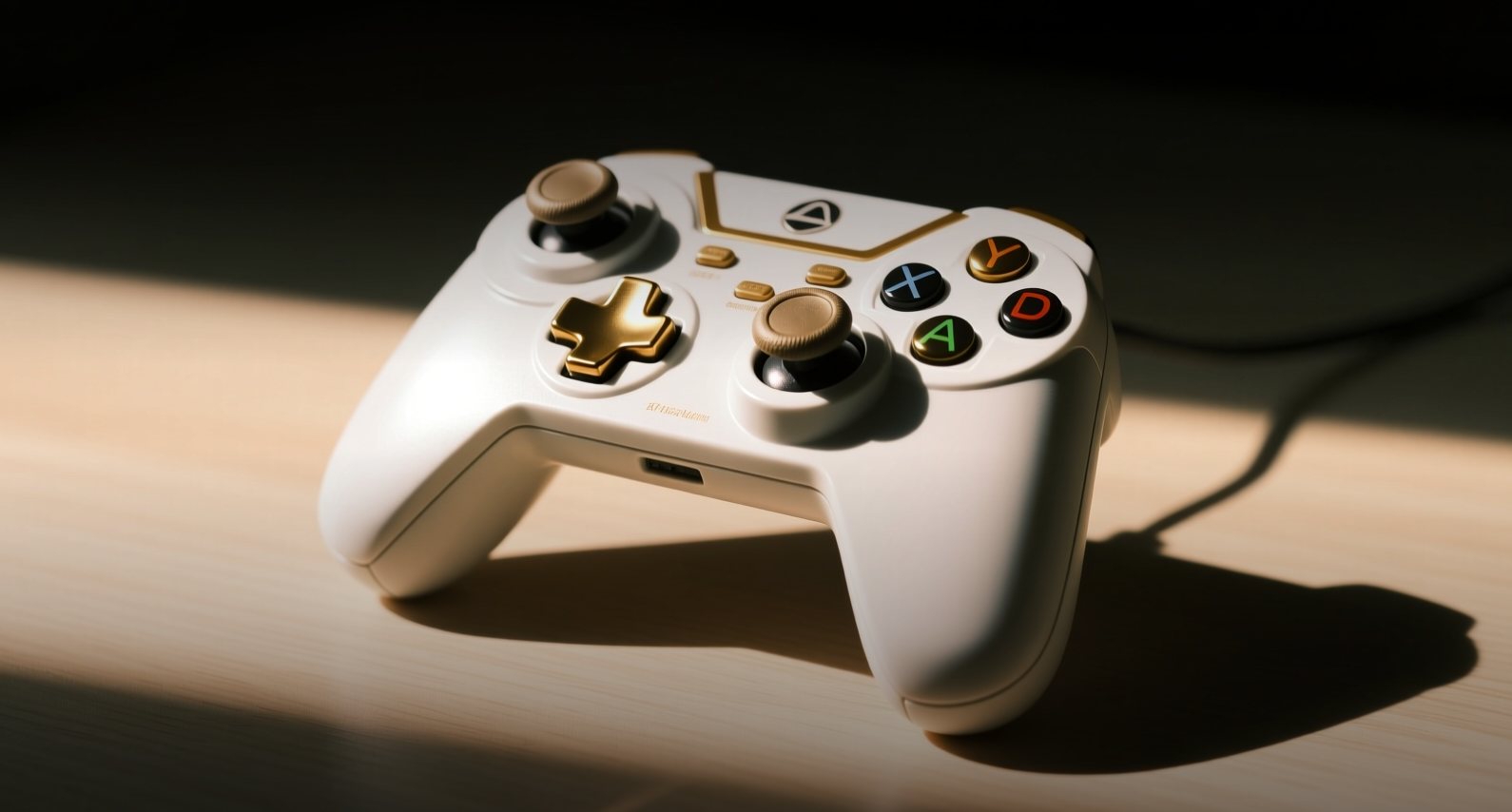
China approves 197 games in July, XD Inc's Ragnarok sequel included
China's National Press and Publication Administration licensed 197 online games in July, including XD Inc.'s "Ragnarok M: Eternal Love 2," as Beijing maintained its gradual reopening of the gaming sector after a three-year regulatory crackdown. "Chinese mobile game publishers generated $2.06 billion in combined revenue in June, with 38 firms ranking among the global top 100," analysts at Chasing Securities said in a research note. The July batch included 193 domestically developed titles and four imported games, according to the NPPA's official list. Among the imported approvals was "Aion: Classic," a mobile adaptation of NCsoft Corp.'s flagship massively multiplayer online role-playing game, co-developed with Shengqu Games and slated for a 2026 launch in China. XD Inc.'s "Ragnarok M: Eternal Love 2," a sequel to the mobile MMORPG based on Gravity Co.'s Ragnarok intellectual property, received approval for both PC and mobile platforms. The latest approvals extend a trend of regulatory normalization that began in late 2022 after Beijing's sweeping crackdown erased more than $600 billion from the market value of Chinese gaming and technology companies. With monthly approvals now averaging more than 100 titles, the NPPA has created a stable policy environment that allows developers to plan multiyear release pipelines. The July tally of 197 licenses marked the second consecutive month above 190 approvals, following June's 195 titles. Before the crackdown, monthly approvals averaged about 80 to 90 titles, according to historical NPPA data. The sustained pace suggests regulators have settled into a rhythm that balances industry growth with content oversight. **XD Inc. Gains a Pipeline Driver** For XD Inc., the approval of "Ragnarok M: Eternal Love 2" adds a proven franchise to its release calendar. The original "Ragnarok M: Eternal Love" generated significant revenue for the Shanghai-based publisher after its 2018 launch, and the sequel arrives as the company seeks to rebuild its growth trajectory. XD Inc. shares closed 1.6 percent lower at HK$42.15 on the day of the announcement, with short selling accounting for 17.7 percent of turnover, or HK$13.8 million. **Aion Mobile Targets 2026 China Debut** NCsoft's "Aion: Classic" mobile game, developed in partnership with Shengqu Games, received its foreign game license — a permit required for titles based on intellectual property owned by non-Chinese companies. The game was first disclosed during NCsoft's third-quarter 2025 earnings call, with Chief Financial Officer Hong Won-jun targeting a 2026 release in China. The approval positions NCsoft to tap China's mobile gaming market, which generated $45.2 billion in revenue in 2025, according to the Game Publishing Committee of the China Audio-Video and Digital Publishing Association. The sustained approval pace benefits not only developers but also the broader Chinese technology ecosystem. Gaming license normalization removes a key overhang for Tencent Holdings Ltd. and NetEase Inc., the country's two largest game operators, which together account for more than 60 percent of domestic market revenue. For global investors, the reopening shows that Beijing is prioritizing industry stability over regulatory retrenchment — a shift that could support valuations across the Hang Seng Tech Index, which counts gaming and internet companies among its heaviest weights. This article is for informational purposes only and does not constitute investment advice.