Edgen AI operates independently of, and is not controlled by Aspen Digital Financial Limited.
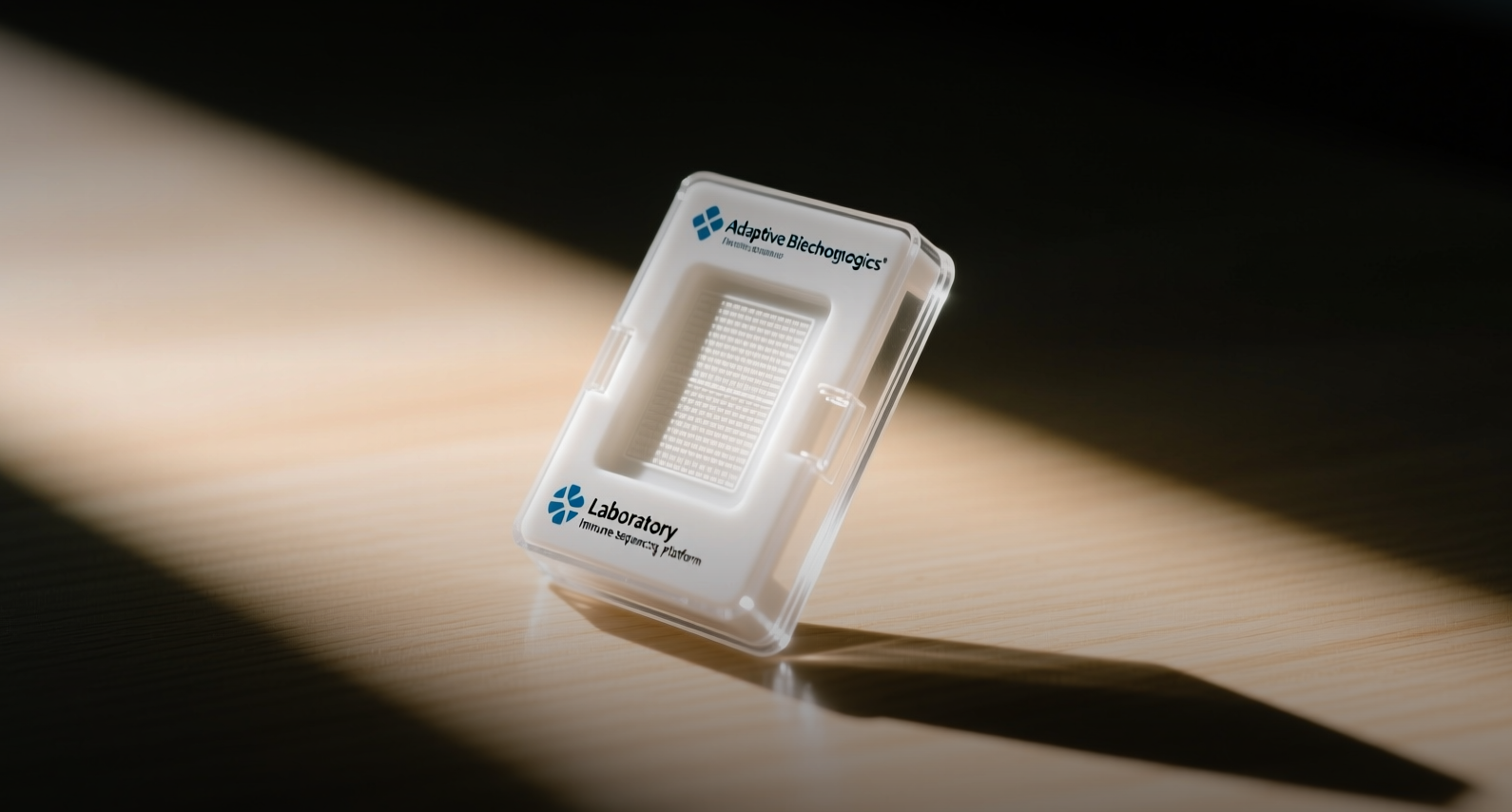
Adaptive Biotechnologies beats Q2 estimates with $71.6M revenue, narrower loss
 Edgen Stock·Jul 30 2026, 18:15
Share to
Share to
Copy link

Related News

Jul 30 2026, 19:41
Aardvark Therapeutics drops 32% as FDA halts lead drug trial
Aardvark Therapeutics shares fell 32% on May 15 after the FDA placed a clinical hold on its lead drug candidate for Prader-Willi Syndrome. "The investigation continues to focus on the propriety of Aardvark's disclosures about ARD-101 safety and efficacy data, along with disclosures regarding communications with the FDA," Reed Kathrein, partner at Hagens Berman, said. The clinical hold follows Aardvark's voluntary pause of the Phase 3 HERO trial on March 2, 2026, which sent shares down 56% in a single session. The company said the pause was based on "reversible cardiac observations" — a serious safety signal. The FDA's hold applies to all ongoing studies under the investigational new drug application, including the HERO trial and the open-label extension trial. The two setbacks erased $7.92, or 63%, from Aardvark's share price since Feb. 27, 2026. The clinical hold threatens the company's entire pipeline, as ARD-101 was its lead asset targeting hyperphagia in patients with PWS, a genetic disorder characterized by insatiable hunger. Aardvark had previously emphasized that ARD-101 represented a "first-in-class" drug and that, "through alignment with the FDA," it started dosing patients 13 years and older, moved to patients 10 years and older, and intended to dose patients as young as 4 years old. The company had also assured investors that ARD-101 has "a very tolerable safety profile." The decline puts Aardvark's stock at its lowest since the initial selloff in March, testing investor confidence in the company's ability to resolve the FDA's concerns. The next catalyst will be any update from Aardvark on its response to the clinical hold and the timeline for a potential resolution. This article is for informational purposes only and does not constitute investment advice.

Jul 30 2026, 19:39
Drone strike on Egypt gas tankers threatens Suez oil route for 5 million bpd
**A drone strike on two gas tankers at Egypt's Damietta port has renewed fears that the Suez Canal — the last viable export route for Saudi oil — could become the next target in the widening Middle East conflict.** A drone strike that damaged two gas tankers at Egypt's Damietta port has raised the risk of disruption to the Suez Canal, a vital export route for as much as 5 million barrels a day of Saudi oil rerouted from the Strait of Hormuz. "The passage through the Red Sea, even via the longer Mediterranean route, could be put at risk, which threatens up to 5 million barrels per day of oil supply that can currently bypass the Strait of Hormuz," said Saul Kavonic, head of energy research at advisory company MST Marquee. No party claimed responsibility for Wednesday's strike on the US-owned Energos Winter floating storage vessel and the GasLog Salem tanker at Damietta, located on a Nile Delta branch near the Mediterranean. The Houthis denied involvement, with the group's foreign affairs office calling reports "unfounded" via the Saba news agency. Crude loadings via the Sumed pipeline — which crosses Egypt from the Red Sea to the Mediterranean port of Sidi Kerir — surged to 28.79 million barrels in July from 19.52 million in April, Kpler data show, as tankers avoid both Hormuz and the Bab el-Mandeb strait. Any disruption to the Suez Canal would have an "almost immediate impact on prices," said Matthew Wright, principal freight analyst at Kpler, because longer voyages around Africa would push up freight costs and delay crude deliveries to Asian refiners by roughly a month. Insurers may also command higher war-risk premiums for canal transits, said Martin Senior, head of LNG pricing at Argus, even without a specific threat to the waterway. **Oil Flows Shift as Chokepoints Close** Hardly any tankers are passing through the Strait of Hormuz, previously the route for about a fifth of global oil and LNG supply, after Iran threatened to stop all Middle Eastern energy exports. Saudi Arabia rerouted most of its crude to the Red Sea's Yanbu terminal after the war began, but Houthi threats since July 20 have pushed many vessels north toward Suez instead of south through Bab el-Mandeb. About 30 ships have clustered at the Port Said anchorage at the canal's Mediterranean end, up from about 20 earlier this week, MarineTraffic data show. About 43 percent of Yanbu loadings headed south in July, down from 81 percent in June, according to Kpler. Some vessels, including Chinese tankers, have received Houthi permission to pass, while an increasing number are traveling with their trackers turned off, said George Morris of energy analytics firm Vortexa. **Canal Security Under Scrutiny** The Damietta strike marked the first attack on Egyptian territory since the US-Iran conflict erupted, extending the theater from the Gulf and Red Sea into the Mediterranean. While the canal is "heavily guarded and secured around the clock," said Wael Kaddour, a former Suez Canal Authority board member, the incident showed that the canal zone lies within drone range of Iran-backed groups. "An attack anywhere within the canal region would substantially increase war risk insurance premiums," said Corey Ranslem, CEO of maritime security group Dryad Global. "It would also substantially change the security assessment of the region." The market has not yet priced in canal disruption, said Aly Blakeway, head of Atlantic LNG at S&P Global Energy. Oil prices fell on Thursday as traders focused on Iranian-Omani talks over Hormuz, with Brent crude slipping from last week's $102 peak. The rerouting of Saudi crude through Suez and Sumed — which has capacity for 2.5 million barrels a day — shows the canal's critical role in keeping global supply chains intact as the conflict spreads. This article is for informational purposes only and does not constitute investment advice.

Jul 30 2026, 19:34
OpenAI slashes GPT-5.6 Luna price 80% in AI pricing war
OpenAI cut the price of its cheapest GPT-5.6 model by 80% three weeks after launch, dropping Luna to 20 cents per million input tokens — a move that pressures margins across the AI industry while expanding the addressable market for high-volume automation. "Under-the-hood improvements should be passed back to our users and customers in the form of more widely available, cost-efficient intelligence," five members of OpenAI's technical staff wrote in a July 29 engineering post detailing the optimizations that enabled the cuts. The reductions put Luna at 20 cents per million input tokens and $1.20 per million output tokens, down from $1 and $6 at its July 9 launch. Terra, the mid-tier model, fell 20% to $2 and $12. Sol, the flagship, held at $5 and $30. The efficiency gains — a 20% reduction in end-to-end serving costs and a 15% improvement in token-generation efficiency — came from rewriting production GPU kernels and redesigning Sol's speculative-decoding draft model, OpenAI said. The pricing shift arrives as enterprise customers scrutinize AI spending. Uber burned through its entire annual AI budget in four months, and Amazon's engineering organization capped AI spending after cost overruns. OpenAI shipped hard spend limits for API organizations on July 22, letting administrators set monthly ceilings. Both OpenAI and Anthropic have filed confidential IPO prospectuses with the SEC, adding pressure to demonstrate durable business models. **Where Luna and Terra sit against Anthropic** At 20 cents input and $1.20 output, Luna undercuts Anthropic's cheapest published model, Haiku 4.5, by a factor of five on input and roughly four on output. Terra's new rate of $2 and $12 sits below the $3 and $15 that Claude Sonnet 5 is scheduled to charge once its introductory rate of $2 and $10 lapses on Aug. 31. At the top of both lineups, Sol still costs more on output than Opus 5, which Anthropic prices at $5 and $25. OpenAI also replaced Priority Processing with Fast mode, matching Anthropic's product name and terms: up to 2.5 times standard speed at twice the price. Fast-mode rates are $10 and $60 for Sol, $4 and $24 for Terra, and 40 cents and $2.40 for Luna. Both companies now charge a 10% uplift for region-pinned inference when customers require data residency. **What the cuts mean for AI buyers** The cheaper tiers are where high-volume production traffic lives: classification, extraction, request routing, first-pass drafting, and the long agent loops where one user instruction can trigger dozens of model calls. A five-fold cut on the tier absorbing that volume changes the arithmetic on which workloads are worth automating. OpenAI caps tool output at 10,000 tokens by default and keeps model-visible history append-only, so agent loops resending instructions and tool definitions at every step hit the prompt cache instead of paying full input rates. On a task requiring 30 model requests, that is 30 chances to avoid recomputing the same prefix. For a team already routing bulk work to Luna, the same calls now cost a fifth of what they did, with a ceiling they can set in the dashboard. The cuts also benefit ChatGPT Work and Codex subscribers. OpenAI said the lower prices are reflected in how usage is counted against paid subscriptions, meaning Terra and Luna users can complete more tasks before hitting limits. Subscription prices remain unchanged. OpenAI's own research found staff using ChatGPT well beyond their job titles, suggesting the lower costs could widen internal adoption. With Sol's price unchanged, the live decision stays where OpenAI has put it since the family shipped: which tier each request requires. Cheaper Chinese open-weight models have sharpened the competitive environment, pushing OpenAI and Anthropic to make the case that their products are worth the premium. This article is for informational purposes only and does not constitute investment advice.