Edgen AI operates independently of, and is not controlled by Aspen Digital Financial Limited.
10-year Treasury yield tops 5% as Fed hike bets pressure tech
 Edgen Stock·Sep 23 2026, 15:40
Share to
Share to
Copy link

[1] 10-year Treasury yield hits new high, pressures tech stocks and Bitcoin markets (https://cryptobriefing.com/10-year-treasury-y ...)[2] See the 10-Year Treasury Yield's Wild Ride on the Road to 5% (https://www.msn.com/en-us/money/investment/se ...)[3] Treasury yields rebound as markets weigh further Fed hikes (https://seekingalpha.com/news/4644469-treasur ...)[4] Treasury yields move lower after Fed kicks off hiking cycle (https://www.cnbc.com/2026/09/17/treasury-yiel ...)[5] Investing pros see the bond market headed for a recovery after yields hit 'maximum pain' (https://www.msn.com/en-us/news/other/investin ...)
Related News

Sep 23 2026, 16:09
Cybersecurity stocks gain 4% as CIBR diverges from falling QQQ
A tight cluster of security-software names broke away from a falling technology tape on Wednesday morning, and the fund that tracks them went with it. CrowdStrike, Palo Alto Networks, Okta and Palantir each rose 4% intraday while the Invesco QQQ Trust fell 0.83%, a split that left the First Trust NASDAQ Cybersecurity ETF up 1% against the large-cap technology complex. "Each of the three names is outrunning the cybersecurity fund itself, which points to a group bid rather than a single-stock story," said David Moadel, market analyst at 24/7 Wall St., who covers the session for the Market Movers desk. CrowdStrike traded at $259.82, Palo Alto Networks at $388.27 and Okta at $203.58, all up 4%. Palantir Technologies, which is not a security vendor, matched the group at $192.90, up 4%. No company-specific disclosure was verified for any of the four names, leaving sector rotation as the mechanism the figures support. The direction of the move carries the signal. A group rising alongside the large-cap technology fund is participation; a group rising against it is rotation, and Wednesday's session is the latter for CrowdStrike, Palo Alto and Okta. The same session put the S&P 500 down 0.61% at 7,727.20, the Nasdaq 100 down 0.84% at 30,493.10, the Dow Jones Industrial Average down 0.64% at 51,611.00 and the Russell 2000 down 1.46% at 2,853.38 — a tape where small caps were sold harder than mega caps, and security software was bought anyway. ## Palantir's 4% gain cuts both ways Palantir's inclusion complicates the read. The company sits inside QQQ as one of its large-cap technology holdings, so PLTR bucking its own fund on the same morning says the AI trade is being bid selectively rather than uniformly. Enterprise and government software with an AI angle is holding a bid while the mega-cap complex around it slips. That selectivity is the part of the session most likely to reverse. Palantir carries direct exposure to the mega-cap technology cycle, so its 4% gain is the least durable leg of the cluster and the first place a fading rotation would show up. The argument behind the rotation rests on how security spending behaves in a slowdown. Systems already deployed still have to be monitored and defended, and the spread of autonomous software agents widens the attack surface rather than narrowing it. Every agent that can reach data or execute a task is another identity that must be authenticated and controlled, and identity is where Okta lives. Security budgets, on that reading, do not obviously fall in the scenario that worries the rest of the technology sector. ## A pattern that has repeated since June Wednesday is not the first session this year to separate the cyber cohort from the tape. Palo Alto Networks rose 9%, CrowdStrike 7% and Okta 5% on June 29. CrowdStrike gained 5% with Palo Alto and Okta up 4% on July 6. CrowdStrike advanced 3% on September 15 as the AI security bid outran a falling tech tape, and CrowdStrike and Okta rose 4% on September 21 on AI safety warnings. The reversals were just as sharp. CrowdStrike fell 7% on August 19 despite a Truist price target raise to $245, with Palo Alto down 5%. On September 1, CrowdStrike dropped 7% and Palo Alto 6% even after a $2 billion Optiv partnership milestone. The pattern is a sector that re-rates in bursts and gives the gains back on the next macro shock, not a straight line higher. For holders, the session's message is that cybersecurity is trading as a defensive corner of technology rather than a levered bet on AI-model spending — a framing that argues for sizing the cyber cohort of CrowdStrike, Palo Alto and Okta separately from the mega-cap complex where Palantir sits. The test is whether the group's outperformance versus QQQ persists into the afternoon close and through the next session; a single morning of divergence is a hide, and a week of it is a rotation. This article is for informational purposes only and does not constitute investment advice.
Sep 23 2026, 16:07
US crude stockpiles build 3 million barrels, defying 500,000-barrel draw forecast
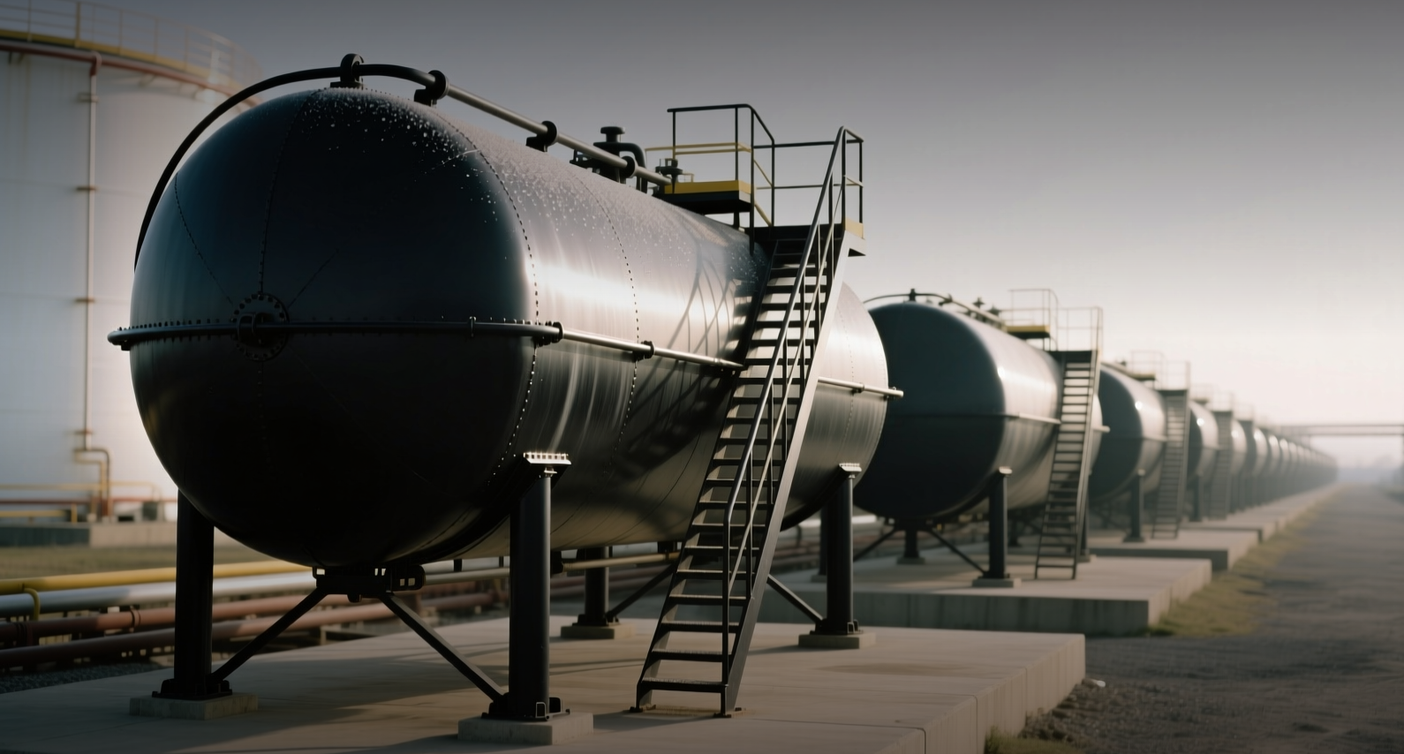
A 3.5-million-barrel miss against consensus landed on the wrong side of positioning last week, as the U.S. Energy Information Administration reported Wednesday that commercial crude stockpiles grew by 3 million barrels instead of shrinking by the 500,000 barrels analysts had penciled in. The build lifted commercial inventories to 426.4 million barrels, putting them 2 percent above the five-year average for this time of year, according to the EIA's weekly petroleum status report. The American Petroleum Institute had flagged the direction a day earlier with a smaller 1.786-million-barrel gain. "The headline number is bearish, but the barrel count is doing all the work here," said Omar Tariq, commodities strategist covering oil and gas markets. "Crude built because imports ran and refiners were still working through maintenance season. The product side tells a different story." Gasoline inventories fell 1.7 million barrels after a 800,000-barrel gain the prior week, and middle distillates — the diesel and heating oil pool — drew down 400,000 barrels. Distillate stocks now sit 12 percent below the five-year average, a gap that has persisted through the third quarter and leaves the heating season with thin cover. The demand read is where the bearish case weakens. Total products supplied, the EIA's proxy for U.S. oil consumption, averaged 20.6 million barrels per day over the four weeks to September 18, up 0.5 percent from the same stretch a year earlier. Gasoline demand held at 8.8 million barrels per day on the same four-week basis, while distillate supplied averaged 3.6 million barrels per day, down 0.3 percent year over year. Prices moved against the inventory signal. Brent crude traded at $101.40 a barrel at 10:05 a.m. in New York, up $2.15, or 2.17 percent, on the day, though still about $6 below where it sat a week earlier. WTI gained $1.47, or 1.63 percent, to $92.00, roughly $10 lower than the prior week. The divergence between a bearish stockpile print and a higher settle points to a market trading macro risk appetite over a single weekly data point. The last time crude stocks posted a build of this size against a consensus draw, in the week ended April 24, WTI fell 3.1 percent over the following five sessions before recovering as refinery runs climbed back above 90 percent of capacity. That pattern matters for how traders treat this print: builds driven by import timing and maintenance tend to reverse within two to three reporting cycles, while builds driven by genuine demand erosion do not. For the energy sector, the immediate read is a modest drag on integrated majors and shale producers whose cash flow assumptions lean on WTI holding above $90. A sustained move below that level would pressure buyback capacity at the large-cap producers and complicate fourth-quarter capital budgets. The next test arrives with the EIA's report for the week ended September 25, due October 1, which will show whether refinery utilization has recovered enough to pull crude out of the system. This article is for informational purposes only and does not constitute investment advice.
Sep 23 2026, 16:03
Alibaba's AI revenue runs triple digits as capex hits $9.5B
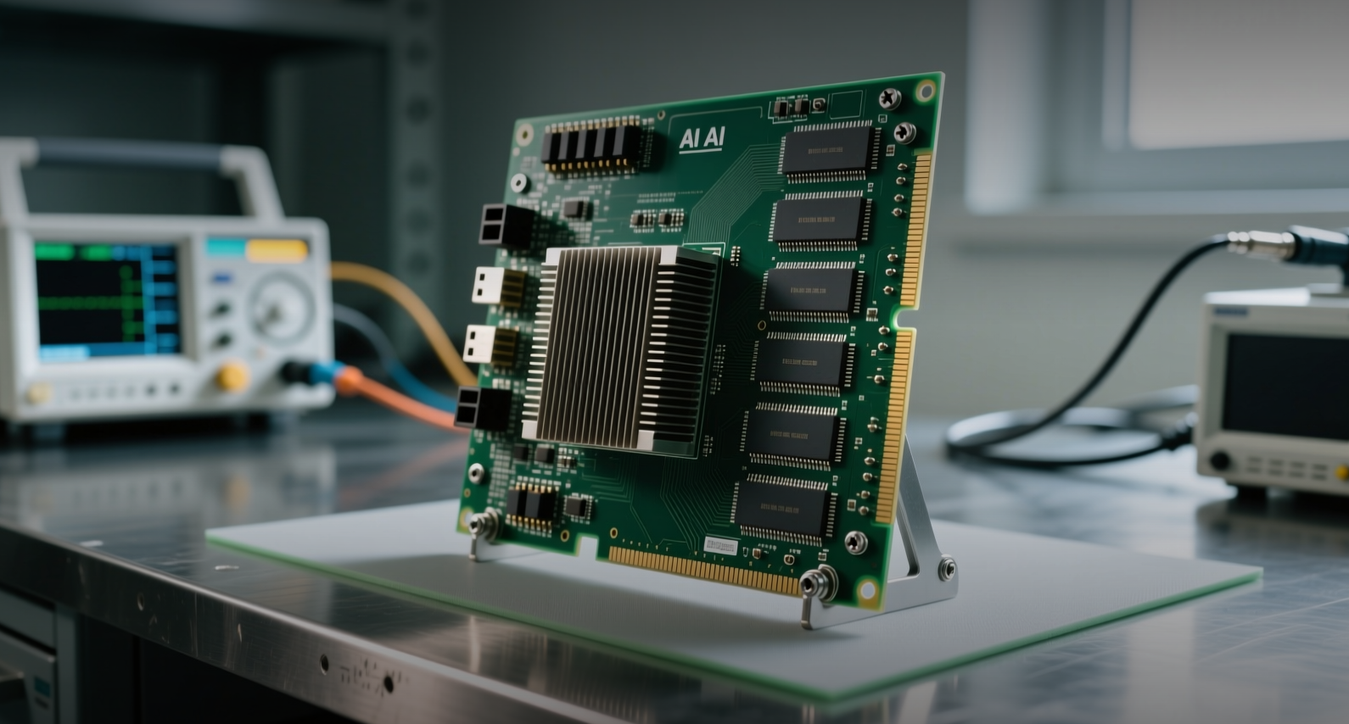
Alibaba's cloud unit grew external revenue 45% in the June quarter, a 22-quarter high, while capital expenditure climbed 75% year over year to RMB 67.68 billion ($9.5 billion) — a spending pace that cut quarterly net profit by 75% and left investors weighing whether the AI buildout pays for itself. "AI-related products now represent 35% of external cloud revenue after 12 consecutive quarters of triple-digit growth," Alibaba management said on the June-quarter earnings call, guiding the annualized AI run rate toward $10 billion in the following quarter. The arithmetic behind that guidance is where the tension sits. Alibaba Cloud's external revenue growth accelerated to 45% from 3% headline growth in fiscal 2026, and the segment's EBITDA margin already stands at 12% and is expanding. Management estimates a 2.5-year payback on AI infrastructure, which would place the earnings recovery inside the next 18 months. Against that, operating margin fell to 6% of revenue from 14% a year earlier, and the company raised $10.2 billion in August through 710 million new shares at HK$112.70 — a 3.6% dilution at an 8.4% discount to the prior close. Bernstein analyst Robin Zhu cut his price target to $165 from $180 while keeping a Buy rating, citing execution risk and the credibility cost of raising capital after the company had highlighted a strong cash position. Susquehanna took the other side, maintaining a Positive rating and lifting its target to $190 in late August. The competitive frame is what makes the capex number legible. Alibaba's Qwen family competes directly with DeepSeek's models on cost-per-token economics and with ByteDance's Doubao on domestic enterprise adoption, while its in-house AI chips are designed to reduce reliance on Nvidia's H20 and Huawei's Ascend 910B for inference workloads. Every dollar of that RMB 67.68 billion quarterly capex is a bet that owning the silicon and the model stack lowers the marginal cost of serving tokens below what a pure cloud reseller can match. That bet carries a policy dimension Alibaba does not control. U.S. export controls have repeatedly reshaped which accelerators Chinese cloud providers can buy, pushing Alibaba toward in-house designs and domestic foundry capacity. The company has not disclosed the process node or performance specifications of its latest AI chip, and did not disclose the test conditions for any internal cost comparisons against Nvidia or Huawei parts. The stock reflects the disagreement. BABA's tokenized shares traded at $115.40 on Sept. 21, above the 7-day simple moving average of $112.25 and the 20-day at $111.50 but below the 50-day at $118.81 — a recovery, not a resumption. The forward P/E of 17.67 sits against a consensus mean target of roughly $184 to $188 across 26 covering analysts, 21 of whom rate the stock a Strong Buy. The PEG ratio of 0.51 prices hyper-growth cloud metrics like a slow-growth value name. The dilution overhang has not fully cleared, and a securities class action carries an Oct. 5 lead-plaintiff deadline. Offsetting that, Chairman Joe Tsai and CEO Eddie Wu bought a combined HK$120 million of BABA shares in the open market after the equity raise, and the company holds $385.7 billion in total cash. The next verdict point is Alibaba's November earnings report, estimated for Nov. 24. If cloud external revenue holds above 45% growth and segment EBITDA margin expands, the forward-multiple de-rating case weakens and a move toward $135 to $140 becomes the base case on a simple re-rating to 22-23x. If capex keeps outrunning monetization, the 75% net-profit decline stops looking like a buildout phase and starts looking like the run rate. This article is for informational purposes only and does not constitute investment advice.