Edgen AI operates independently of, and is not controlled by Aspen Digital Financial Limited.
XRP Ledger hits 157,200 daily active users as network adoption accelerates
 Edgen Crypto·Jul 23 2026, 10:42
Share to
Share to
Copy link


[1] XRP User Count Soars Above 150,000: Is XRP Regaining Bull Market Usage Levels? (https://u.today/xrp-user-count-soars-above-15 ...)[2] XRP whales accumulate as small holders capitulate (https://www.coindesk.com/markets/2026/07/23/x ...)[3] XRP Ledger surpasses 1M agentic transactions, driven by AI and x402 protocol (https://cryptobriefing.com/xrp-ledger-surpass ...)[4] XRP price eyes breakout as golden cross, whale accumulation and XRPL activity surge (https://coinjournal.net/news/xrp-price-eyes-b ...)
Related News

Jul 23 2026, 12:16
Pendle Finance targets $200M Boros milestone with H2 2026 RWA push
**Pendle Finance is doubling down on real-world assets and institutional infrastructure as its Boros rates platform hits $200 million in open interest.** Pendle Finance unveiled its H2 2026 roadmap on July 23, prioritizing RWA infrastructure and institutional access after TVL nearly doubled to $13.4 billion during 2025. "Pendle V2 has solidified its position as an on-chain fixed income protocol, while Boros made initial progress in the on-chain interest rate derivatives market," co-founder TN said during a community meeting on July 23. The protocol's Boros platform reported $200 million in open interest as of July 22, with cumulative trading volume exceeding $14 billion since its launch less than a year ago. Pendle V2 averaged about $1.3 billion in daily TVL during the first half of 2026, with 9 of 11 major markets on the platform using real-world assets as collateral. The protocol also launched on the Monad network, reaching about $150 million in TVL and becoming one of the top five protocols on that chain in less than a month. The roadmap positions Pendle to capture a share of the growing tokenized RWA market, which depends on regulatory clarity that remains uneven across jurisdictions. The protocol plans to introduce tokenized ETFs and single bonds through partnerships with RWA issuers in New York, while Boros shifts its focus to cross-platform funding rate arbitrage targeting institutional arbitrageurs. **Boros expands beyond crypto-native yields** Boros has been branching into commodities and equities, extending Pendle's rate speculation concept across asset classes. The platform added tools such as four-legged arbitrage strategies, large trade acceptance, and funding rate data dashboards to meet professional trading needs. User count on Boros rose 50 percent since the start of the year, according to the team. Pendle's core mechanism lets users split yield-bearing assets into principal and yield components, then trade them separately. Principal Tokens function like zero-coupon bonds, letting holders lock in a fixed yield, while Yield Tokens let speculators take leveraged bets on variable yields. The protocol settled $45 billion in value for Principal Token holders during 2025. **Institutional doors open through Fireblocks and Citadels** Pendle's institutional push got a concrete boost on July 16, when Galaxy Curator launched on Fireblocks, giving institutional players access to yield vaults supporting Principal Tokens through Fireblocks' custody infrastructure. The Citadels initiative, first announced in January 2025, targets KYC-compliant institutional frameworks and has pursued Shariah-compliant yield offerings. Citadels also has a cross-chain dimension, targeting non-EVM chains to broaden Pendle's reach beyond the Ethereum ecosystem. On the protocol side, Pendle completed its migration from vePENDLE to sPENDLE, with about 36 percent of PENDLE now staked and 93 percent of stakers yet to unstake. The protocol used revenue to repurchase about 2 million PENDLE and reduced weekly liquidity incentives from about 90,000 to 21,000, improving capital efficiency. A one-click Loop feature was also introduced within the app to simplify leveraged yield strategies. For the second half of 2026, Pendle plans to advance curation infrastructure, allowing external teams to create PT/YT markets, and promote the use of PT assets as collateral for lending protocols through partnerships with platforms like Morpho. The success of these efforts will depend on whether Pendle can attract enough volume in new verticals like commodities and equities to justify the infrastructure investment, or whether crypto-native rate trading remains its core revenue driver. This article is for informational purposes only and does not constitute investment advice.

Jul 23 2026, 12:13
Bitcoin faces quantum threat exposing 35% of supply by 2030
**Quantum computers could break Bitcoin's encryption by 2030, putting roughly 7 million BTC — 35% of supply — at risk of theft.** Bitcoin faces a systemic security threat from quantum computing that could expose roughly 7 million coins, or 35% of total supply, by decade's end. "Preparing the network would require developers to introduce quantum resistant signature schemes and users to move funds into protected addresses," Galaxy Research head Alex Thorn said. "Galaxy's role is to bridge that gap through research that makes the threat legible to investors and policymakers." Project Eleven, a quantum security firm, concluded in a May report that a cryptographically relevant quantum computer is more likely than not to exist by 2033 and potentially as early as 2030. Google has projected encryption risks to Bitcoin as early as 2029. Galaxy Digital committed as much as $5 million in developer grants, a research program, and a Quantum Advisory Council to fund post-quantum cryptographic solutions. The Nasdaq-listed firm said it expects to begin accepting grant applications immediately. The threat centers on Shor's algorithm, which could derive a private key from an exposed public key, allowing an attacker to drain wallets without on-chain detection. Old and reused addresses are most at risk. Any upgrade to quantum-resistant signatures would require years of coordination across Bitcoin's decentralized governance, making the timeline for action shorter than it appears. **$420M in vulnerable supply demands urgent action** The 7 million BTC at risk includes coins in pay-to-public-key outputs where the public key is written directly onchain, and addresses that have already spent from — exposing their public keys. Roughly 1.1 million BTC attributed to pseudonymous creator Satoshi Nakamoto sits in the most vulnerable category, mined before hierarchical deterministic wallets existed. More than 34% of all bitcoin sits in addresses whose public keys have been exposed, according to BIP-361. Coinbase's quantum advisory council in June urged developers to begin migration work rather than debate timing, pegging vulnerable supply at about 7 million BTC. President Donald Trump signed two executive orders the same month, moving the federal deadline for post-quantum cryptography to December 2031. The orders require federal agencies and contractors to migrate to quantum-resistant encryption for key establishment by the end of 2030 and for digital signatures by the end of 2031. **A recovery path emerges, but not for Satoshi's coins** Project Eleven in July unveiled a zero-knowledge proof system that lets wallet owners prove control through key derivation rather than signatures — a fallback after Q-Day. The prototype generates a proof in 243 milliseconds on an M5 MacBook Air, with verification taking 40 milliseconds, according to the firm. That is roughly 60 times faster than prior work. But it remains unaudited, supports only three Bitcoin address types rather than Taproot, and cannot recover coins from pre-2012 wallets — including all of Satoshi's holdings. BIP-361, published in April by Jameson Lopp and five co-authors, proposed freezing quantum-vulnerable coins after a transition period, blocking new deposits to vulnerable addresses after three years and freezing whatever remained after five. The loudest objection to that plan has been that freezing coins breaks Bitcoin's promise of permanent ownership. Project Eleven's recovery proof changes the argument: a freeze becomes a lock rather than a burn, but only for users who still hold their seed phrase. Satoshi never had one. The implications for Bitcoin holders are immediate. Anyone with coins in reused or pay-to-public-key addresses should consider migrating funds to quantum-resistant addresses before Q-Day arrives. Defenses under discussion include adopting new signature schemes through proposals such as BIP-360 and BIP-361, though such upgrades could take years given Bitcoin's decentralized governance. Galaxy's initiative aims to accelerate that timeline by funding developers working on post-quantum solutions. Galaxy's Quantum Advisory Council includes University of Calgary professor Barry Sanders, MIT Sea Grant Knauss Fellow Damien Bérubé, and Boston University computer science professor Eran Tromer. Founder and CEO Mike Novogratz said the firm believes it is important to "help be part of the solution to any potential threat quantum computing poses to Bitcoin." This article is for informational purposes only and does not constitute investment advice.
Jul 23 2026, 12:09
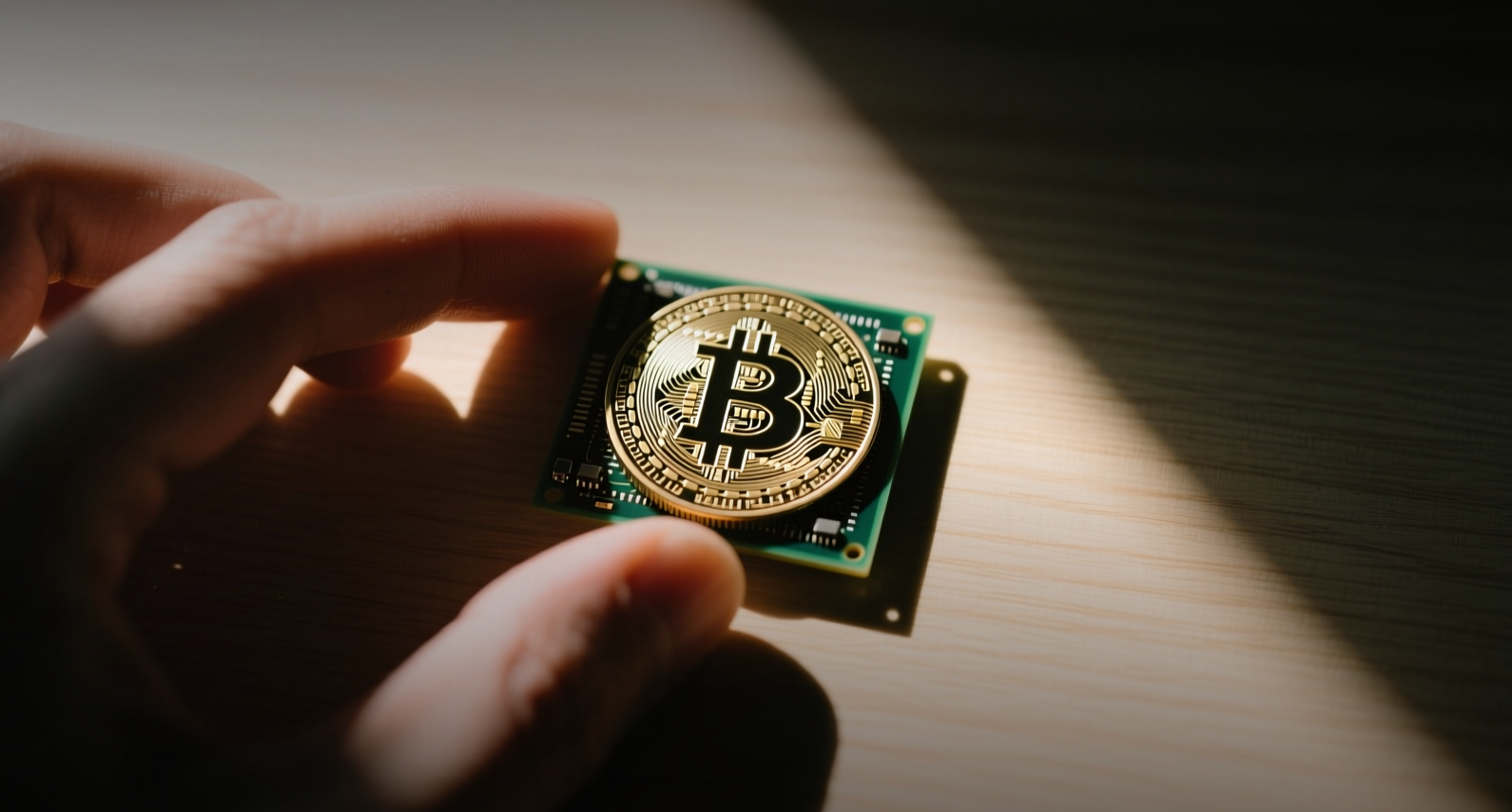
Bitcoin miners sign $150B in AI deals as Bernstein stays bullish
**Bitcoin mining companies have secured more than $150 billion in combined AI data center contracts as the sector pivots from digital asset infrastructure to high-performance computing.** Bitcoin mining companies have signed more than $150 billion in combined AI data center contracts, with Bernstein maintaining an overweight rating on the sector. "Access to power remains the real bottleneck for the AI industry, and Bitcoin miners with existing infrastructure are uniquely positioned to fill that gap," the Bernstein analysts wrote in a July 23 research note shared with Cointelegraph. The investment manager's deal tracker recorded a new AI-related partnership every week in July, with combined contracted capacity exceeding 7.5 gigawatts. Hut 8 announced a 15-year, $9.8 billion lease for its Beacon Point AI data center campus in Texas, while IREN disclosed $2.8 billion in cloud services contracts with AI developers. TeraWulf signed a 20-year lease with AI startup Anthropic that could generate roughly $19 billion in contract revenue. The convergence between Bitcoin mining and AI computing comes as data center construction faces growing bipartisan political pushback. Texas Democratic Senate candidate James Talarico proposed stronger local approval processes for data centers, while the Trump administration published a Ratepayer Protection Pledge requiring new facilities to bear their own grid costs rather than shifting them to households. **Hut 8 and IREN Lead the Pivot** Benchmark analyst Mark Palmer raised his price target on Hut 8 to $195 from $165, citing the company's "power-first" approach to AI infrastructure. The second 15-year lease at Beacon Point, adding 352 megawatts of IT capacity, brings the campus to 704 MW contracted against 1,000 MW of total utility capacity. Palmer estimates the new lease alone could contribute roughly $655 million a year in net operating income once stabilized, pushing the campus's total contract value as high as $50.2 billion if renewal options are exercised. Hut 8 shares climbed more than 10% on the lease announcement, closing near $101. The company also holds a majority stake in American Bitcoin, the mining venture backed by Eric Trump and Donald Trump Jr. IREN began converting its infrastructure advantage into contracted revenue through the $2.8 billion cloud services deal, though Seeking Alpha contributor The Curious Analyst flagged execution risk as the biggest threat to the thesis. **Political Headwinds Threaten Data Center Buildout** The political environment for new data centers has shifted. Oregon Senator Ron Wyden raised concerns that AI data centers could worsen water scarcity during persistent droughts, noting that large facilities can consume up to 5 million gallons of water per day. Several state governors have published plans to expand the grid for AI demand but insisted that data center operators bear the costs rather than residential customers. For Bitcoin miners without signed contracts, the window may be narrowing. Keel Infrastructure, the rebranded successor to Bitfarms, controls a 2.2 gigawatt power pipeline across Pennsylvania, Washington and Quebec but has yet to land its first hyperscale colocation deal. The stock trades at $4.65, with BTIG initiating coverage at Buy and an $8 price target implying 72% upside — contingent on a signed customer. The $150 billion in combined contract value across the sector shows that Bitcoin mining infrastructure has found a second life as AI compute capacity. But with political resistance mounting and execution risk remaining for companies still seeking their first hyperscaler partner, the gap between announced deals and delivered revenue will determine which miners emerge as winners. This article is for informational purposes only and does not constitute investment advice.