Edgen AI operates independently of, and is not controlled by Aspen Digital Financial Limited.
BancaStato launches bitcoin trading for 4 assets as Swiss banks pile in
 Edgen Crypto·Jul 23 2026, 06:40
Share to
Share to
Copy link





[1] Swiss Bank BancaStato Launches Bitcoin Trading Through Sygnum and Avaloq (https://bitcoinmagazine.com/news/swiss-bank-b ...)[2] The Fed rang the alarm about Anthropic's Mythos AI model — but had to go months without it (https://www.msn.com/en-us/money/markets/the-f ...)[3] Infleqtion Adds 50 Logical-Qubit System To Chicago Quantum Hub (https://www.forbes.com/sites/karlfreund/2026/ ...)[4] Swiss Cantonal Bank BancaStato Launches Crypto Trading Service With Sygnum - bloomingbit (https://en.bloomingbit.io/feed/news/116833 ...)
Related News

Jul 23 2026, 08:30
BitMEX to shut down exchange Sept. 23 after 11-year run
BitMEX will shut down Sept. 23, 2026, after parent HDR Global Trading Limited decided to close the 11-year-old crypto derivatives exchange following a strategic review. "We want to reassure you that your assets remain fully safe and under your control during this transition period," BitMEX said in a statement to users. The Seychelles-based exchange immediately halted new registrations. From Aug. 26, traders can only reduce existing positions, with no new positions allowed. BitMEX will force close outstanding positions ahead of the Sept. 23 deadline to ensure an orderly market wind-down. The exchange said it maintained a record of zero customer funds lost to hacks over its 11-year operating history. Users who fail to withdraw funds before the deadline and have completed KYC verification will face custody charges of at least $50 or 1% annually, billed monthly. BitMEX also unstaked all BMEX tokens held in staking, making them immediately available to holders, and warned users about phishing attacks exploiting the shutdown announcement. The exchange invented the 100x leverage perpetual swap, now the most traded product in crypto and adopted by thousands of traders and exchanges globally, the team said. The decision to close followed a strategic review of the business and the wider digital asset industry. Illiquid contracts could be settled early under existing settlement procedures, BitMEX said. After the closure, users will retain account access solely for viewing balances, transaction history, and withdrawing remaining assets. The shutdown marks the end of one of crypto's oldest derivatives platforms, which operated without a single security breach since its founding in 2014 — a record few peers, including exchanges that have lost billions to exploits, can match. This article is for informational purposes only and does not constitute investment advice.

Jul 23 2026, 08:28
Hyperliquid OI hits $11.51B, highest since October crash
Hyperliquid's total open interest reached $11.51 billion on July 23, the highest level since the Oct. 10, 2025 liquidation cascade erased $15 billion in positions and sent bitcoin below $100,000. Data from HyperTracker shows the platform's open interest has climbed 23% from its post-crash trough. The broader crypto derivatives market remains in recovery mode — total open interest across all exchanges stands at $116.66 billion, down 47% from the Oct. 10 level, according to Coinglass. Bitcoin is trading around $65,000. Real-world asset perpetuals are the primary driver of Hyperliquid's rebound. HIP-3 builder markets, a framework launched Oct. 13, 2025 that lets anyone stake 500,000 HYPE tokens to deploy a perp market without core team approval, now carry $3.61 billion in open interest. That makes RWA perps the largest single slice of Hyperliquid's book, overtaking bitcoin, HYPE and other Layer 1 tokens. Daily HIP-3 volume now accounts for 50% of total perp volume on the platform, up from 3% at the start of the year, per The Block. The concentration risk is significant. TradeXYZ, built by Hyperliquid's tokenization arm Hyperunit, holds over 90% of HIP-3 open interest. Because HIP-3 markets sit outside Hyperliquid's native liquidity pool, oracle quality, margin settings and liquidity provisioning fall entirely on the deployer. One venue effectively carries a third of the platform's total open interest. **A Record Share of a Smaller Pie** Hyperliquid's slice of perpetual open interest measured against major centralized exchanges reached 9.5%, an all-time high on Hypeflows data, up from 6.9% in late May. The gain reflects Hyperliquid bleeding less volume than its competitors rather than pulling traders across — Binance, Bybit and Gate.io all contracted harder through the post-crash deleveraging. Binance has taken notice of the category. It launched pre-IPO perpetuals with a SpaceX contract on May 21 and added seven US equity and ETF perps on July 9 with leverage up to 25x. The products Hyperliquid used to have to itself are now available with centralized exchange liquidity behind them. HYPE has outperformed the broader market since the crash, rising about 34% over the same period that the total crypto market cap remains roughly 45% below its Oct. 10 level. Whether Hyperliquid can sustain its open interest growth without diversifying its HIP-3 concentration risk will determine if the platform can reclaim its $15 billion peak. This article is for informational purposes only and does not constitute investment advice.
Jul 23 2026, 08:18
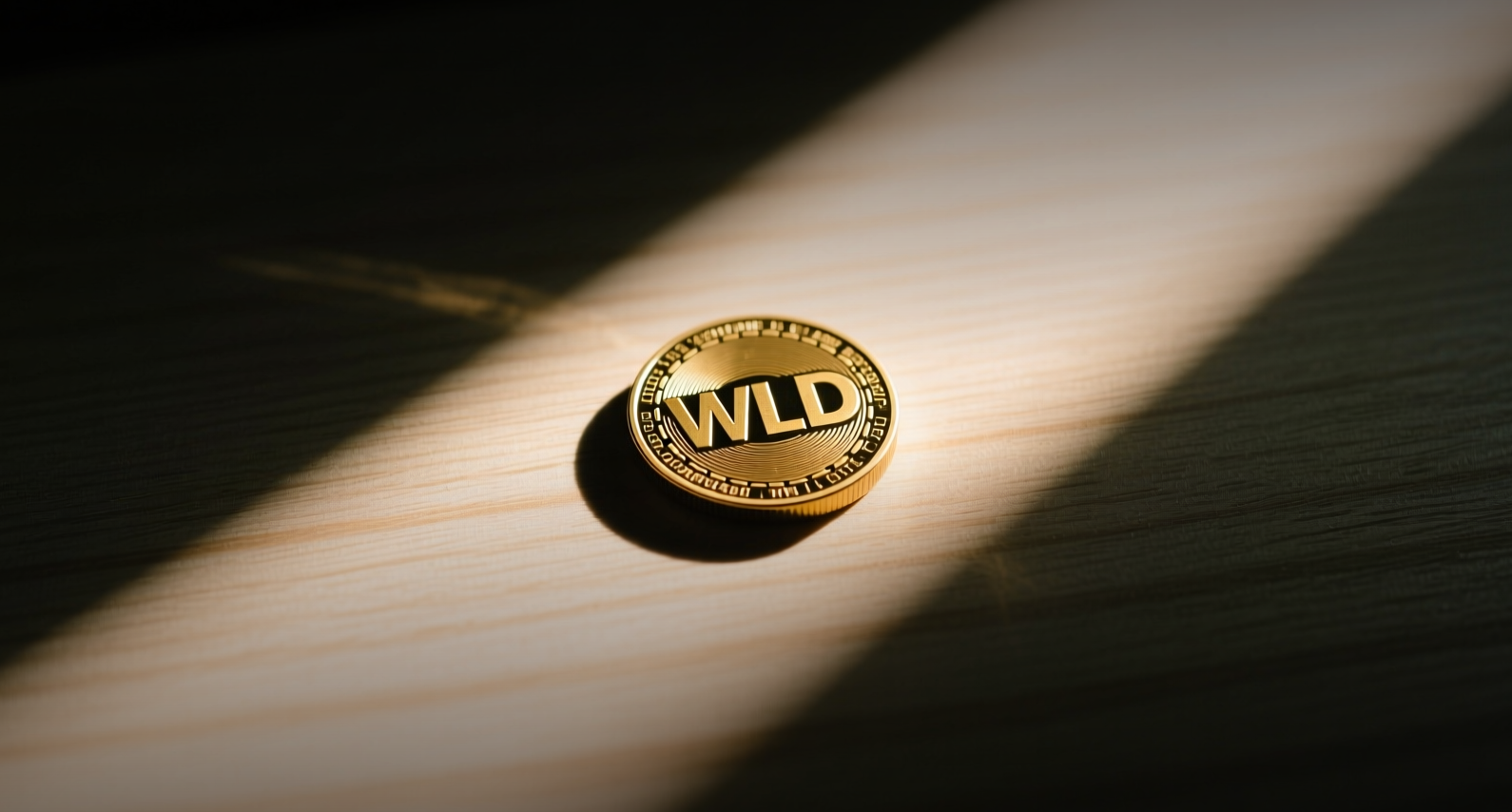
Grayscale Worldcoin ETF filing reveals 90% supply in 100 wallets
Grayscale Investments disclosed in a Securities and Exchange Commission filing that the 100 largest wallets hold about 90% of the circulating Worldcoin supply, raising centralization concerns as the asset manager seeks approval for a spot WLD exchange-traded fund. The disclosure appeared in the risk factors section of Grayscale's Form S-1 registration statement, filed July 20 for the proposed Grayscale Worldcoin ETF on Nasdaq under the ticker GWLD. The filing states that a relatively small group of early adopters controls a substantial share of tokens already released, making WLD more concentrated than its long-term distribution goals suggest. "The 100 largest wallets held approximately 90% of all WLD in circulation as of the filing date," Grayscale said in the prospectus. The asset manager warned that this concentration presents a material risk for prospective investors, as coordinated selling or holding by a small group could influence the token's price. Worldcoin's whitepaper had outlined a vision where most WLD tokens would eventually be claimed by individuals who verified themselves as unique humans through the project's Orb-based identity system. Grayscale's filing contradicts that narrative, noting that governance remains largely under the World Foundation and that World Chain continues to rely on a centralized sequencer and upgrade functions controlled by a limited group tied to Tools for Humanity and Optimism. The filing also highlights that one of the largest addresses belongs to the bridge connecting Ethereum and World Chain, meaning part of the concentrated holdings may represent assets deposited by multiple users rather than a single owner. Even so, Grayscale presented the overall concentration level as a key risk factor. WLD traded at $0.38 as of Wednesday, up about 4.5% since the ETF announcement but still 97% below its all-time high of $11.74 reached in March 2024. The token hit an all-time low of $0.2279 on May 17. Circulating supply stands at 3.5 billion tokens out of a total cap of 10 billion, with continuous insider unlocks expected to add supply through 2028. Beyond token concentration, the filing outlines additional centralization risks. Seven countries — Spain, Portugal, Germany, Hong Kong, Brazil, Kenya and Indonesia — have taken regulatory action against Worldcoin over its biometric data collection practices. The Orb devices used to verify users are still manufactured and distributed mainly by or under the direction of Tools for Humanity, according to the filing. If approved, the trust would hold WLD directly and use the CoinDesk Worldcoin Benchmark Rate to determine its net asset value. BitGo Bank & Trust would serve as custodian, while BNY Mellon would act as administrator and transfer agent. Grayscale has not yet disclosed the management fee, seed investment or the number of WLD represented by each share. The SEC filing does not guarantee regulatory approval, and Nasdaq cannot list the product unless regulators sign off on the registration process. Bloomberg ETF analysts confirmed the filing but noted that amendments will be necessary before any final decision. The S-1 filing represents an early step in what could be a lengthy approval process, with the SEC's stance on WLD's concentration and centralization likely to be a focal point of review. This article is for informational purposes only and does not constitute investment advice.